Vague Stuff
13/02/2026
13/02/2026
When it comes to programming, I'm still not in the mood.
So... taking the idea of disks from der Kramskiste, I look back to 1988.
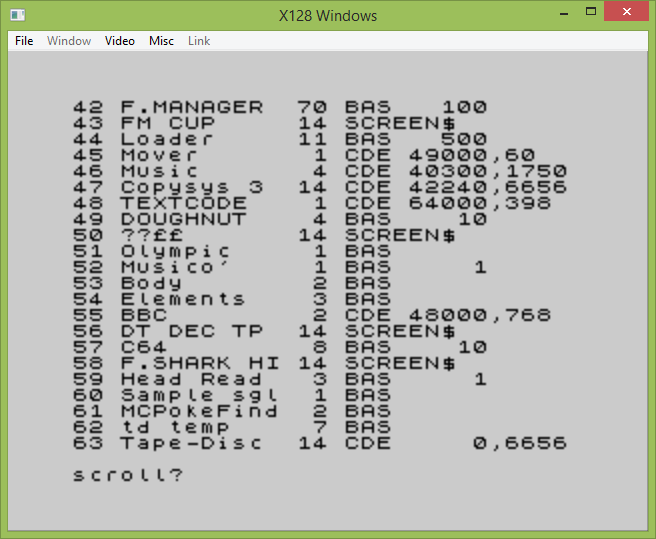
My eclectic disk of utils, type-ins, and saved high-score screens
On this disk, there's a BASIC program called "C64". Why?
In 1988, I was reading multiformat magazines, trying to think of what my next step should be. For a time, I was considering a PC Engine console, as it appeared to be the most powerful and I knew that I could obtain the games via mail order. However, the price of the games was a concern, plus there would be absolutely no possibility of borrowing, swapping, or seeing games before I bought them - I'd be the only person I knew who had one and I'd have to rely entirely on whatever game reviews I could find. If it broke down, it would be hard to find someone to repair it.
So, while I was tempted, I felt that I was better off getting a C64. It helps to have money to spare when importing.
Much 'a goo' about nothing...
Let's look at another disk...
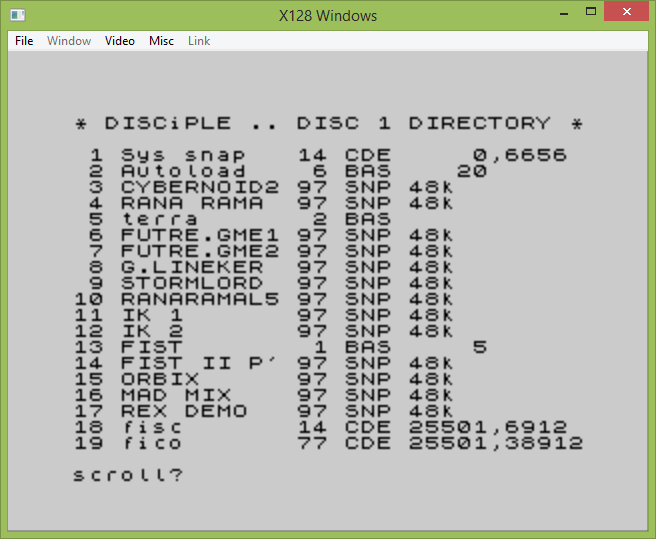
By reading the track rings we can see that this was a time of shortages...
Looking at this disk, note how the items are either older games or from magazine covertapes (Cybernoid II, Stormlord, Mad Mix, and Rex are all covertape demos). Also note the Rana Rama snapshot saved on level 5. It's quite strange going back to a savestate from 1988 on a Spectrum.
The Cybernoid II demo came with Your Sinclair, Issue 34, October 1988 magazine and the other covertape files on the disk are from around that period.
At this point, magazines had started to include semi-regular covertapes, which included a demo of a forthcoming game (try doing that with a cartridge-based system - it would've been a very expensive magazine!) It was one of those new things that had seemed impossible, only a few years previously.
Orbix is a full game from a covertape, which was uncommon for the time. I saw a video about Telecomsoft (on RMC) that said that their Silverbird budget game sales fell substantially, once magazines started to regularly put full games on their covertapes. I guess that shows just how tight money was for people.
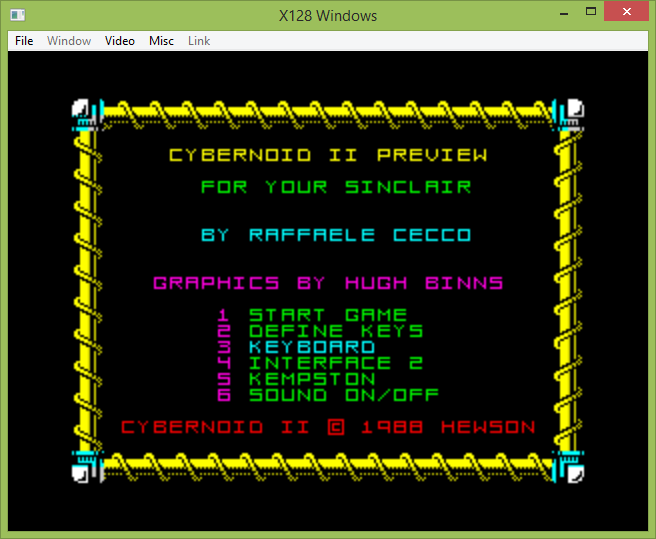
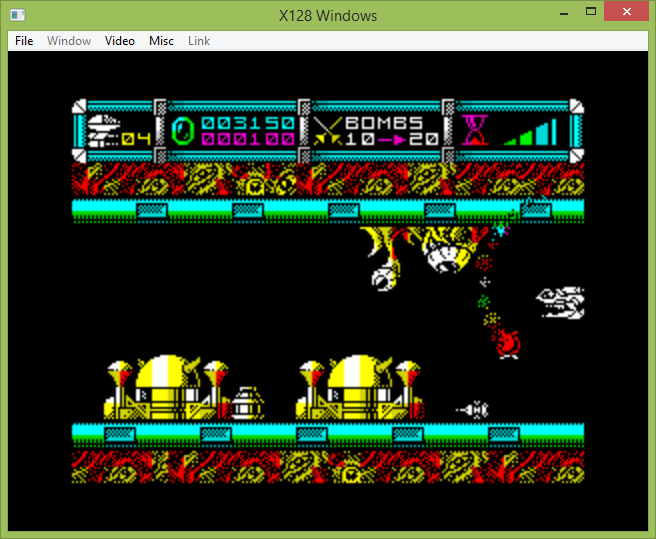
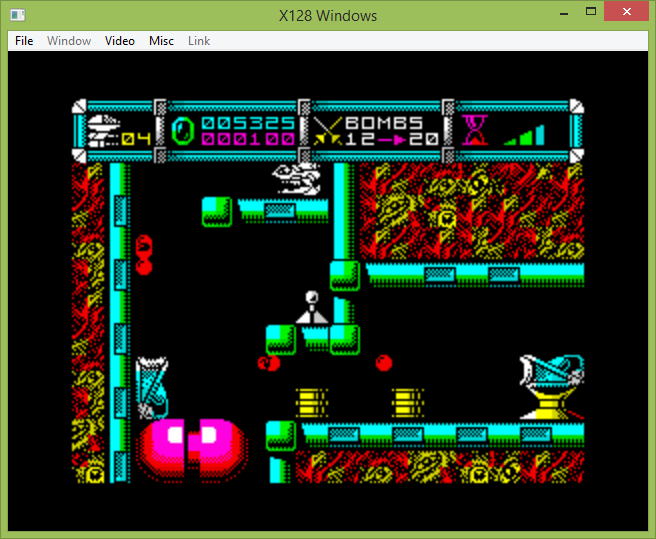
R-Type has appeared in arcades, so Cybernoid II includes gooey aliens and eyeballs
It's easier than the final game (which was a wise decision, if you wanted people to buy it, as it's frustratingly difficult), it only has 6 (out of the final 7) weapons, and it includes some parts that did not make it into the commercial release - a short (easy) level and the vertical gun pictured above. On the odd occasion, you do find things in covertape demos that were left on the cutting room floor.
Despite the difficulty problem, the two Cybernoids were little 8-bit icons of their time (in Europe, at least). Those with less-supported systems would've been quite happy to have it.
Jumping (space) ship...
I decided that I would buy this game, but I made the decision to stop buying Spectrum games and spend my money on C64 games instead, so that I would have more to play when I finally got it. In a most disloyal fashion, I went and purchased Cybernoid II for the C64. You may have spotted the obvious flaw in this plan - it meant that I had no new Spectrum games for over two months! So, between boredom and anticipation, I wrote this little BASIC program to pass the time. Based on the release dates of the games, I'd guess it was written in November/December 1988.
Through careful planning, saving up, buying select titles and compilations, added to the pack-in games, gifts, and some luck, I was able to accumulate 41 games in time for Christmas 1988! (If I'd got the PC Engine, I'd probably only have had one or two games - quite a difference!) That was probably the pinnacle of my financial management skills, it was all downhill from there on!
Anticipation...
First, I had made a list of all the games I was going to be able to play...
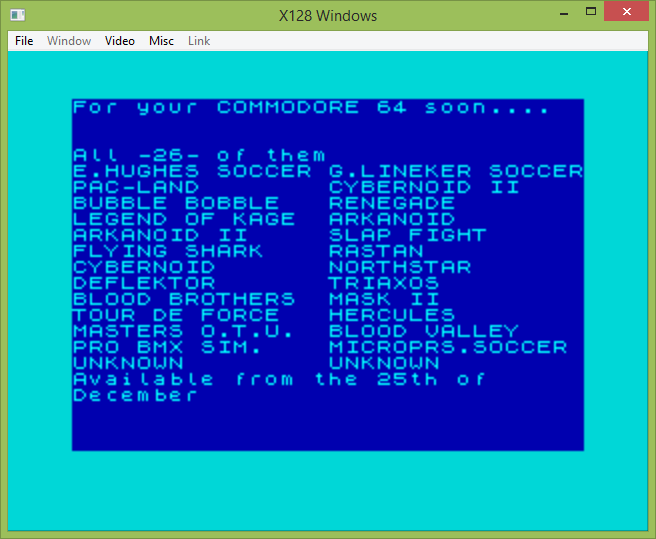
What a collection!
I'm not sure about the two "unknown" titles, but I remember having Solomon's Key and 1943 at the start and their release dates are compatible with that time period, so they were likely gifts (but I probably chose them myself, when we went to the shop). (Hmm... so many arcade games, maybe I should've bought the PC Engine?)
Eight of the games came from the "Taito Coin-Op Hits" compilation and ten came from the "10 Mega Games Volume 1" compilation (naturally, Volume 2 never existed).
The compilation games worked out at something like £1 - £1.30 per game. Excellent value.
One error in the listing, is that Tour De Force was not on the C64 version of "10 Mega Games Volume 1" - it was replaced by Cosmic Causeway.
Pack-in
I didn't know what pack-in games I was going to get until I unwrapped it, so they're not listed in the BASIC program.
Looking at old magazines, the pack I got appeared to be the "Commodore Family Entertainment Pack", which was £199.99 and included a C64C, datasette, Quickshot II joystick, five budget games, a Yamaha SHS-10 keytar, and a personal stereo with a music compilation tape.
The keytar had a MIDI port, but did the C64C have MIDI ports or come with any kind of MIDI cartridge or software? No, it did not. It was effectively three separate gifts in one box. However, the bundle was useful in persuading my dad to buy it. I got the Commodore, my sister (more musically inclined) got the keytar and the personal stereo, and my dad got to save a bit of money while buying presents.
The five budget games are listed in the magazine as Agent X II, Ghostbusters, Rollaround, Tau Ceti, and "mystery game". I'm not sure what it was, but I think it was Invasion (or, possibly, Prowler). Interestingly, Commodore was never tempted to put a big sticker on the side of the box saying: "This pack includes games worth £9.95!"
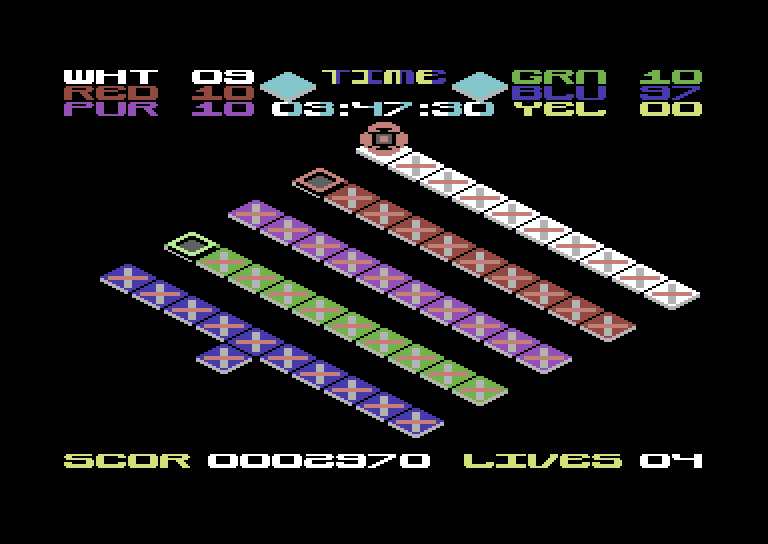
Rollaround is a cute little game
Quality guaranteed...
I had made "reviews" available for some of them (even though I hadn't played them). These were based upon playing the Spectrum versions or from what I had read in magazine reviews or previews.
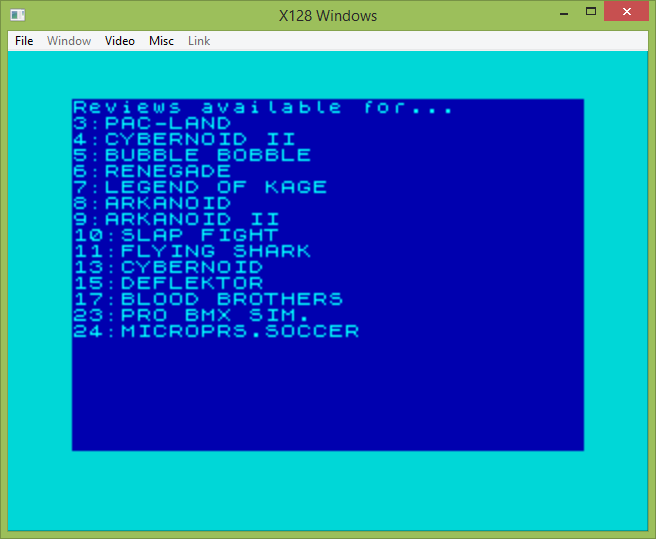
Do you want to press N to see a STOP statement?
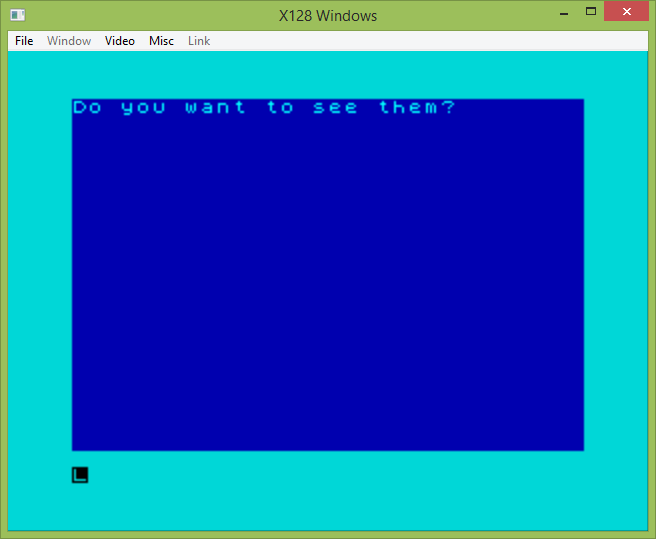
Do you want to see them?
Of course I do, what's the point in the BASIC program (or writing this article) without them?!
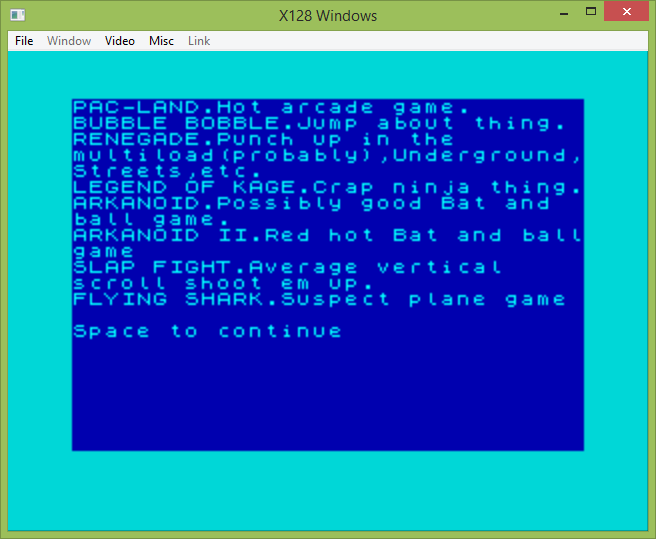
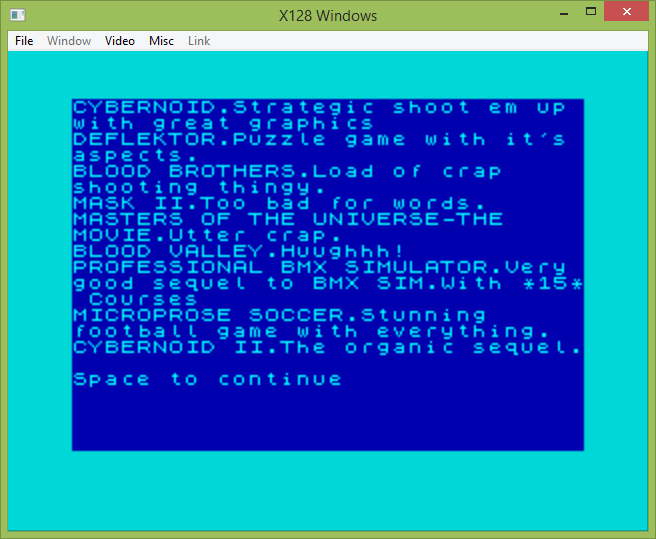
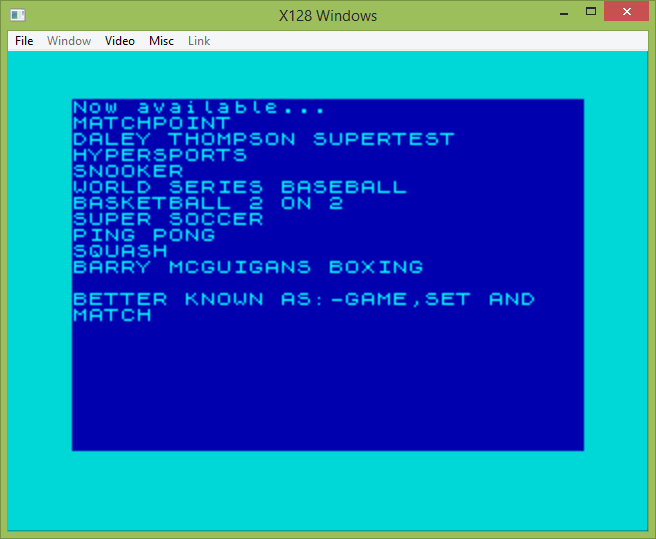
Everyone's a critic...
We are all good friends of Pacman in the Pacland...
Pac-Land was a game I'd seen in the arcades, a few years previously, and I really liked it. The C64 version was fun, although not 100% accurate (you can't jump on the cars, for example), it wasn't based upon the original source code. That was how it was back then.
Nintendo & Sega consoles had only recently appeared in the UK and other Japanese consoles were import-only (ownership of all of them was uncommon, at that point, plus there were a few uncommon Konami MSX games available). So, every Japanese game you bought for the home had been reinterpreted by a Western developer. Sometimes they did a good job, sometimes a bad one, and sometimes it was almost a different game "in the style of" the original. Often it made sense to make a different (playable) game, rather than an accurate (unplayable) one, when the 8-bit computer was just not powerful enough.
It's probably just as well that I'd bought the C64 version, as the Spectrum version is not much fun... Horizontal scrolling is a difficult task on the Spectrum (especially on the 48K), so the developers decided not to.
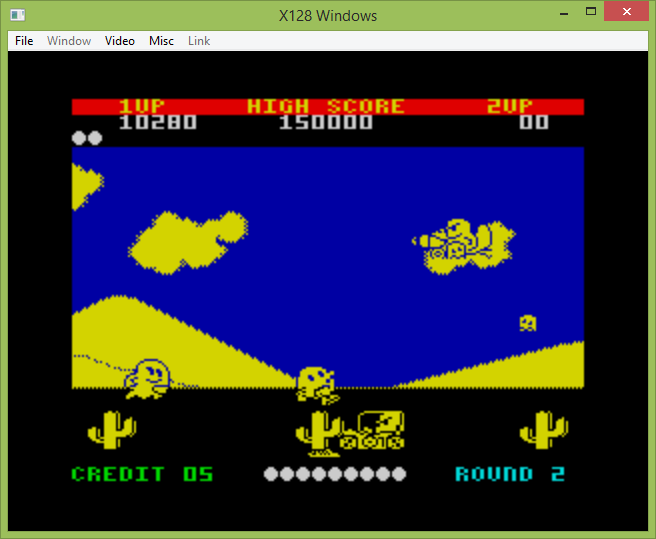
Are you enjoying the Spectrum version, Pac-Man?
Taito Coin-Op Hits
The next seven games were all part of Taito Coin-Op Hits and I'd played some of them on the Spectrum (but I knew nothing about Rastan, so I didn't include it). I thought I'd already know which ones were the good ones, but it didn't quite work out like that.
This compilation also introduced me to one of the problems with the C64. While cassette compilations on the Spectrum had the problem of (frequently) only including the 48K version of a game, the C64 had the problem of some games just not being loadable. Renegade loaded rarely, and Rastan not at all.
After a month, or so, I decided it was time to adjust the little azimuth screw on the datasette and, brilliantly, it worked. I could now play Renegade and Rastan! Ah... but, now a number of the old games didn't load and... it's just about impossible to get it back to exactly the same position as it was in. Once you start twiddling the azimuth, you'll be doing it for the rest of your life!
It would've made more sense to have a second datasette, just for azimuth twiddling, but that wasn't economically feasible at the time. While there were some datasettes that made it easier to twiddle the azimuth, it's a shame that they never made any "auto-tracking" datasettes, they would've been very useful indeed.
10 Mega Games - Volume 1
The next six games were part of 10 Mega Games - Volume 1 and I knew nothing about the other four. I think they all loaded ok, so definitely +1 point for good mastering.
Ah, well, what can I say! I can only apologise for my intemperate language for these next four games, I was 13.
These ones I knew nothing of, at the time...
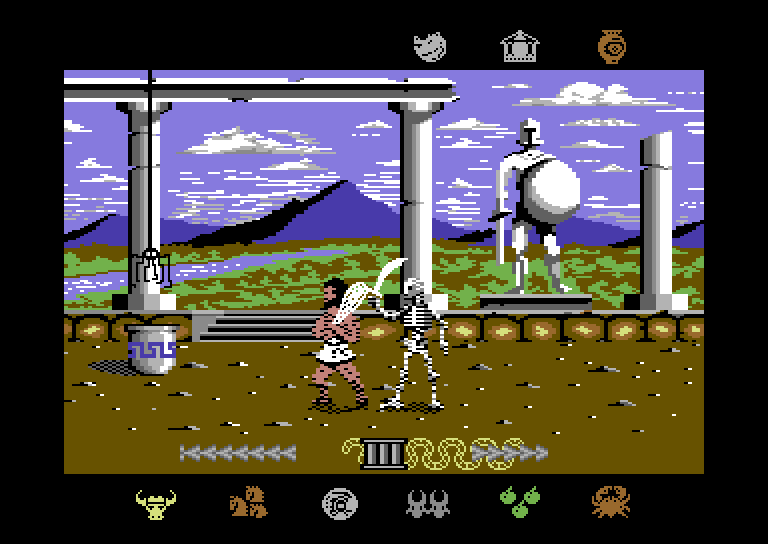
Stay away from my labours!
Ups and downs...
One problem with this era of home computer games, was that sometimes the gameplay was not very honed. A combination of tight deadlines, the logistical problems of having to make versions for three different systems at once (later, it was five systems), a lack of technical information (certainly not as much free sharing as today), a lack of training, a lack of finances, and consumer demographics and demands all helped contribute to a climate where games had to be made quickly and cheaply. Gameplay was often the part that was left to last, then discarded when there was no time or money left. Or, perhaps, the move from the point where you'd first make a game and then figure out how to make it saleable, to the point where you'd first have a saleable idea and then have to figure out how to make a game that fits it.
Another issue was making games very difficult, to help disguise how short they were...
The games had to look good in screenshots because there really weren't that many places where you could see them demonstrated, let alone try them. TV coverage was pretty rare at the time. So, what they looked like was more important than how they moved.
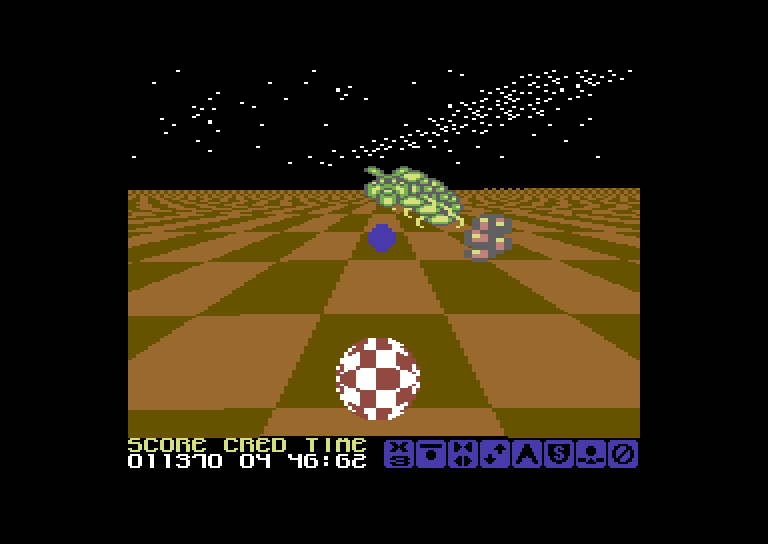
Welcome to the football-sy zone
And the rest...
Note how all the football games mentioned have "soccer" in the title. It was a bit late to be trying to target the US market by then...
But what happened next?
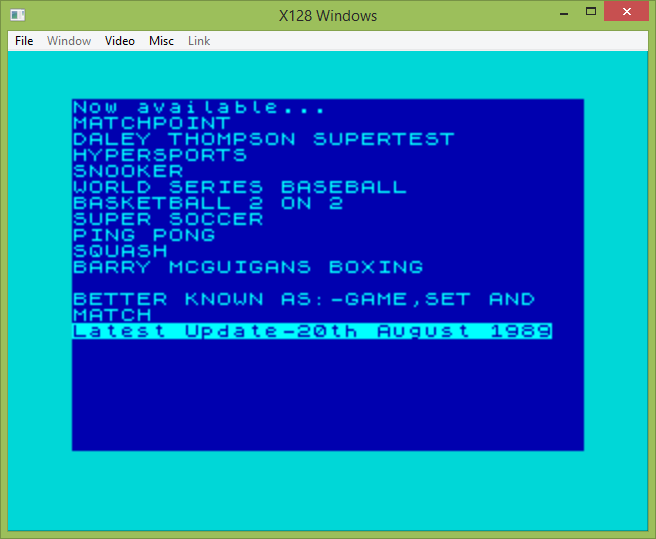
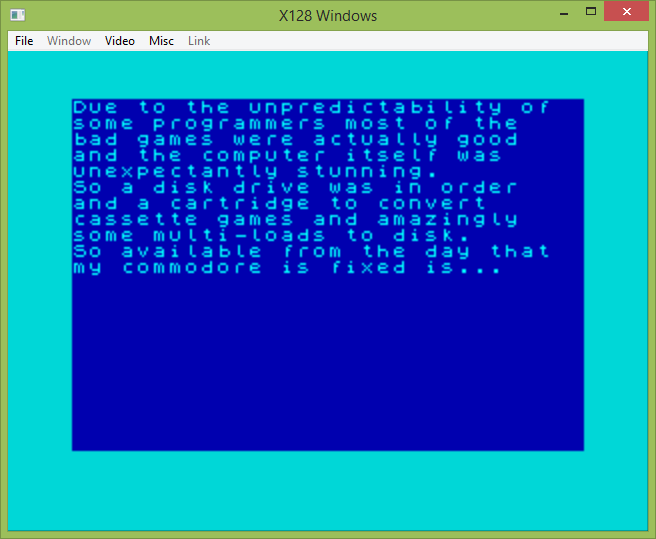
A message from the past
What's this? An update, with an exact date! How did this come about?
Well, humph... My Commodore was broken (a mere 9 months later) due to my misadventure with one of the joystick ports. So I was bored, again, and updated the BASIC program with the games I had accumulated while I was waiting for it to be fixed.
At this point I'm a little older, and a little more diplomatic. Programmers were "unpredictable", rather than good or bad.
By the hardware alone, the C64 should be better at any game that does not require a bitmap. Polygon or isometric games tend to need more processing power than the C64 can provide. But, sometimes, the Spectrum version of a game still played better. The games that were good on one, could be bad on the other. Games being good on both was actually a bit less common.
I was very impressed by the computer, I even called it "unexpectantly" stunning.
Then comes the phrase: "So a disk drive was in order" (see, I've always spoken like this) and the need for a cartridge. When I figure out the dates, it must've only been a few months after getting the C64C that I got a disk drive. Naturally, it was a cheaper option (an Oceanic OC-118N). It was compatible with everything except the initial part of the disk loader of Retrograde (but I was able to skip past it, once I'd figured it out) and the fastest loader of the Action Replay Mk V cartridge that I'd bought, forcing me to type "@K-" after every switch on and reset, to take it down to an intermediate speed (this was fixed in the Mk VI cartridge).
Coming soon (again)...
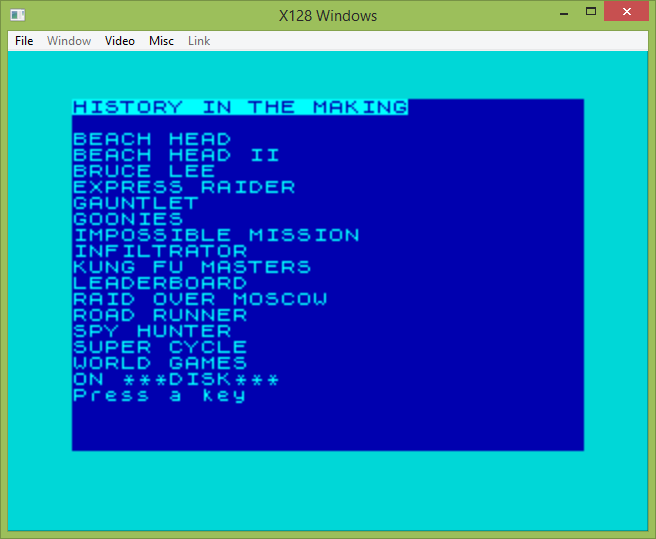
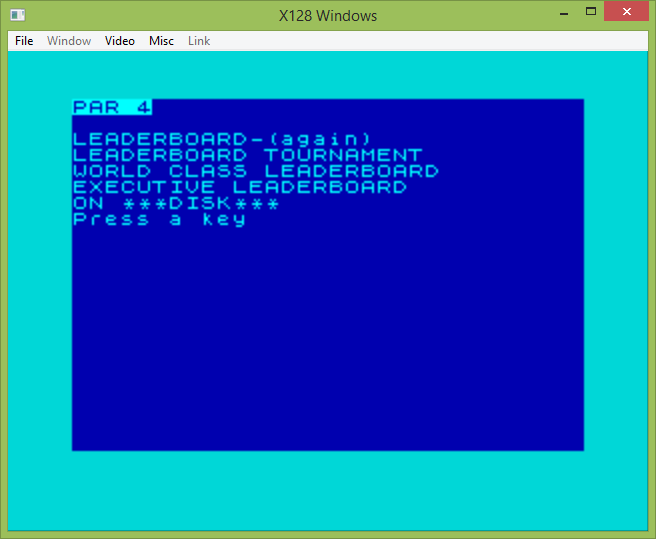
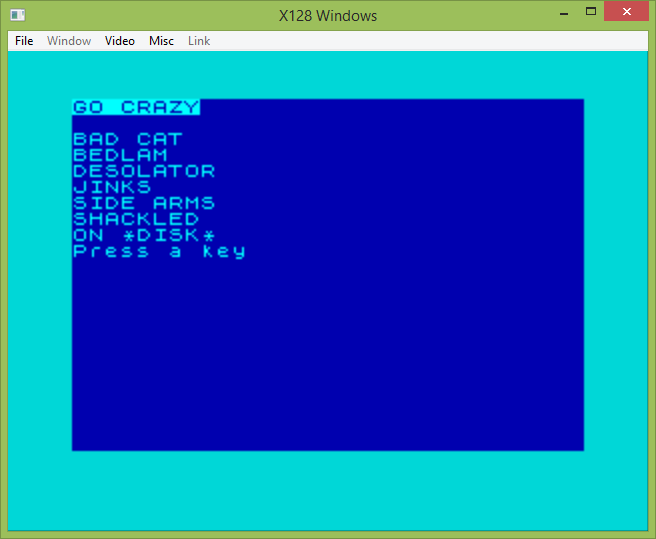
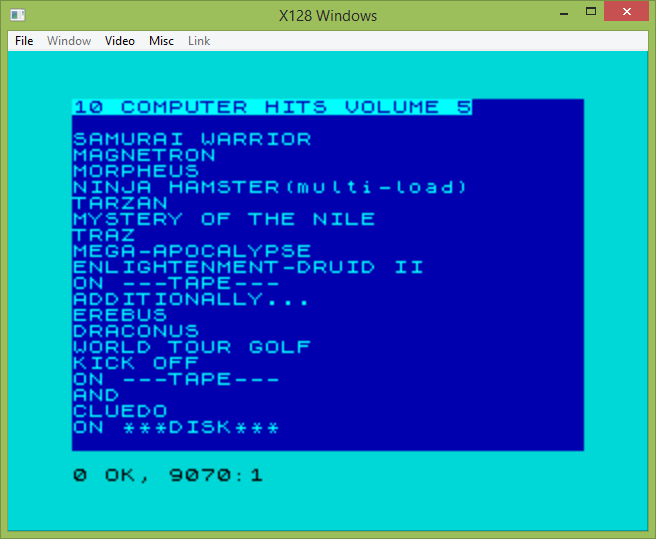
So many disks! Probably the country's entire supply
History in the Making, Par 4, Go Crazy!, and Cluedo were all introductory offers for joining the Home Computer Club. 26 disk games (25 unique) at an incredible discount. An offer that was too good to refuse. The only catch? I had to stay subscribed for 12 months and buy (at least) one item every month. That was quite a chunk of my pocket money.
10 Computer Hits Volume 5 was another one of those bargain compilations (on cassette) that I managed to pick up while in Makro. But, although Makro was a cash-and-carry distributor that supplied businesses and retailers (my dad had a membership card through his workplace), even they did not stock a lot of disk versions of 8-bit games - that's how difficult it could be to find disks! That freezer cartridge was essential!
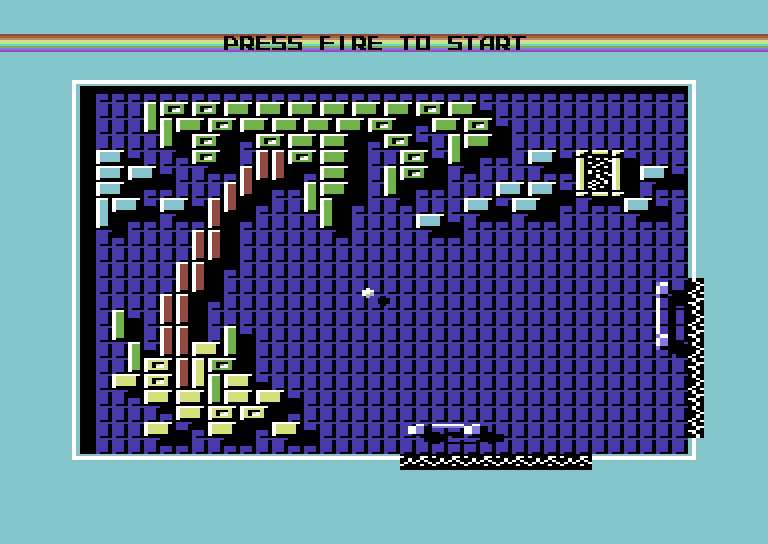
Out of those games, most provided a good set of music, Samurai Warrior (Usagi Yojimbo) had that incredible atmosphere, Traz had the pure gameplay (a really souped-up Arkanoid-style game), and Tarzan had that terrifying loading screen. An all-round good compilation.
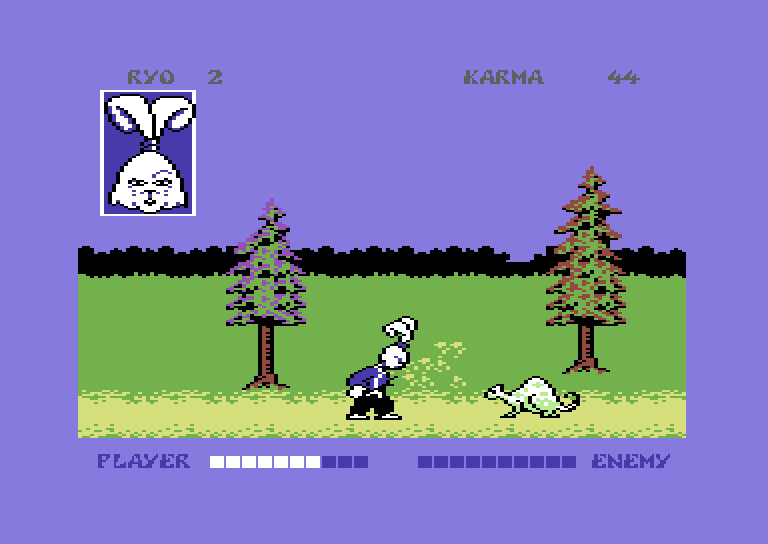
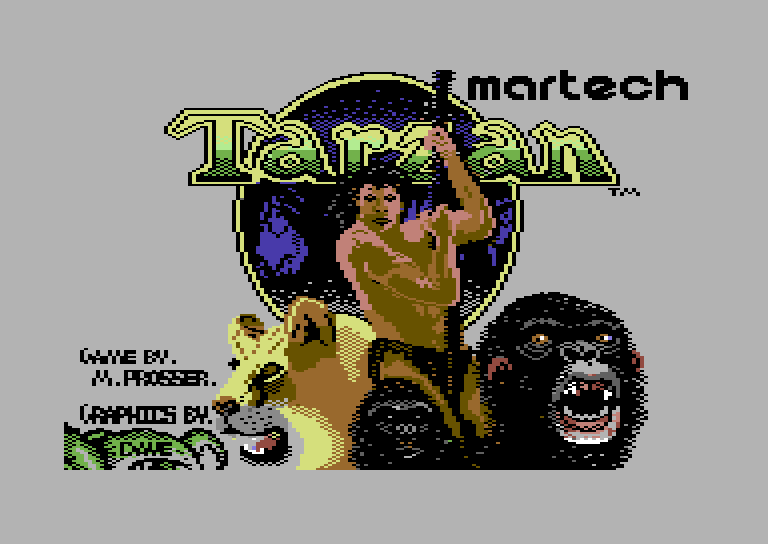
Always show respect to a small dinosaur
Note how I specifically marked Ninja Hamster as a multiload because, as we all know, the natural enemy of the disk drive owner is the cassette multiload game...
There you are, happily snuffling for truffles in the undergrowth, without a care in the world. But it's there, in the bushes... watching, waiting, for just the right moment to pounce...
First impressions...
I can't be 100% sure of what I played first, but I vaguely remember thinking that I should play something that I already had on the Spectrum, so that I could compare it. I'm pretty sure that was Agent X II.
It's important to note that I had only seen screenshots of C64 games. I was not close enough friends with anyone rich enough to own a C64, so I didn't know what loading was like or what the system sounded like. So, Agent X II was a bit of an eye-opener. First, it had Invade-A-Load: the Space Invaders game that you can play while the game loads. I didn't even know that it was possible to play a game while loading from tape! (Technically, it's attaching the cassette input to the NMI line of the CPU, but it makes such a presentational difference).
Second, the music. I also didn't know that it was possible to play music while loading, but not only that, the first thing I hear is Rob Hubbard (One Man and his Droid) while loading, followed by the game itself "scored" by Tim Follin.
Then I played Cybernoid II and I immediately got Jeroen Tel, both the music (from the first Cybernoid) in the loader, then the music in-game.
With the Taito Coin-Op Hits collection, I immediately heard Martin Galway and Peter Clarke. In amongst the collection there's also the likes of Ben Daglish, David Whittaker, Fred Gray, Matt Gray, Jason Brooke, Barry Leitch, etc. It was like one of those greatest hits albums (and it came at a similar bargain price!)
I had heard some of their work on Spectrum games, but not at this level. I was very impressed... Similarly, the loading screens were pretty impressive for the time and so was the scrolling. Games that relied on it would generally provide a smoother experience on the C64.
I still had access to a small number of new Spectrum games, over the next few years, but the C64 was really my first choice at this point.
But...
The only problem was that the C64 had really peaked by that point. There were still some good games to come, but a lot of those developers were starting to concentrate on the 16-bit home computers. Quality and quantity started to decline after this point, as I've mentioned previously.
Basically, it was almost an outdated purchase by late 1988 / early 1989...
Learning through play (again)
Whisper it, but my first real understanding of assembly language came from the C64. The Tandy CoCo and ZX Spectrum were good for learning BASIC but neither had a machine code monitor that allowed you to disassemble areas of memory or directly enter mnemonics into memory. (I had access to more technical articles for the ZX Spectrum, but the Multiface on the Spectrum could not perform either function without extra software, that I did not have).
The C64 was actually no good for it either, only the C128 included such a monitor and I didn't even know it existed, at the time. But, once again, a missing piece of the puzzle resulted in a gain of knowledge. The disk drive was (very, very) slow, and disk games were more expensive and harder to come by, so I needed a method of speeding up disk access and something to get my cassette games onto disk. While budget disk games did (apparently) exist, I never saw a single one in the shops or in the mail order adverts I looked at.
The Action Replay V cartridge was able to speed up disk access, "freeze" most single-load games onto disk, and convert some multiload games too (with the Parameters disk). But snapshots are not very clean, not very satisfying. When it loads, you want it to start just as if it was the real thing. Additionally, the cartridge had a bug whereby it would not always restore the audio registers correctly. Sometimes the game would rewrite the register and solve the problem very quickly, but sometimes it would never rewrite that register, and it would always sound terrible.
So, by experimenting, I realised that I could go backwards through memory and find certain patterns that looked as if they might be the start of something.
Usually something like:
SEI
LDX #$FF
TXS
By trial-and-error (sometimes just by picking an SEI that was on a nice, round address) I was able to get most games to start from a nice, clean position, and with the help of Action Replay's SuperCrunch utility, I was usually able to fit three games on one side of a disk. Not bad for someone who didn't even know where the stack pointer was on a 6502-class CPU. By coming late to the C64, I had missed all of the more technical magazine articles and the manual of the C64C was smaller and less detailed than the original C64 manual.
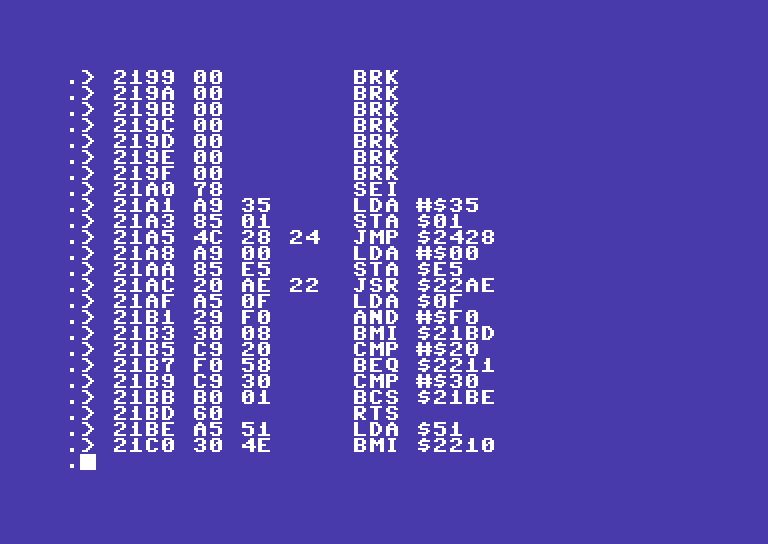
Name that game...
When it came to multiloads my lack of knowledge meant a very low success rate, but I did figure out that JSR $FFBA/$FFBD/$FFD5 were related to loading and I was able to put "easy ones" like Adidas Championship Tiebreak Tennis and Kick Off 2 onto disk (technically, also Soccer Q, but that was entirely in BASIC).
With the knowledge I obtained there, I later took it back to the ZX Spectrum. I bought the Genie 128 disassembler for the Multiface, was able to figure out a lot of things, and was able to convert (almost) everything to disk. The first multiload I managed was P-47: Thunderbolt (it was rather forgiving of the disk interface overwriting some RAM).
So, it took all three computers (plus a disk interface, two disk drives, and two freezer devices) to figure out what I needed, as none of them quite had the complete package.
Regrets and returns
Foolishly, I sold my C64C with its disk drive and game collection. I got £150 for it in (I think) 1991, so that I could invest in a 16-bit machine. An unwise move... (have you seen the price of disk games on eBay?) It's probably the only thing I really regret selling, due to the fine collection and the time and effort I spent on it.
I did buy a second-hand C64 breadbin a few years later (that's when I found out where the stack pointer was), and I was able to take some of the knowledge I'd gained from the Spectrum and used it to convert some multiloads that I couldn't do before.
Unusually, I returned to the ZX Spectrum before its commercial era came to an end. Once the 16-bit home computers had been sold off, the toastrack retook the pride-of-place position (even though I had a SNES and a Mega Drive/Mega CD, while the PC had its own desk elsewhere). It stayed that way until 2000, when I moved house, so I've been retro since the 90s (sometimes by choice).
17/01/2026
One more Addams Family update...
Some things cannot remain unfinished... I went back to the Spectrum version and tried to finish the game by finding Morticia.
I suspected that I'd missed her at some earlier point in the game. Fortunately, the intro provided a hint:
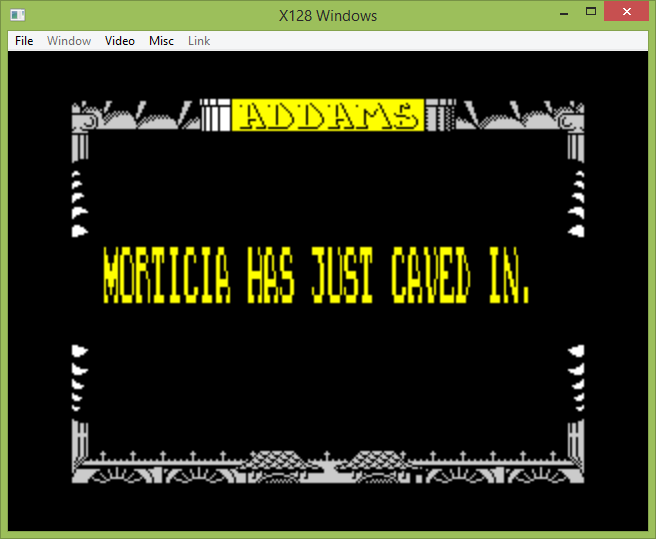
I believe that this is a clue...
I went looking all around the map, trying to find a section of caves. The idea of not reusing my saved state had to fall by the wayside, as I used about 20 continues just trying to find the entrance to the section on the huge map.
And once I had found it... everything was terrible!
I died innumerable times, just trying to get into the main part of the cave. All kinds of difficult screens with long gaps between the doorway checkpoints, forcing you to go back over and over again...
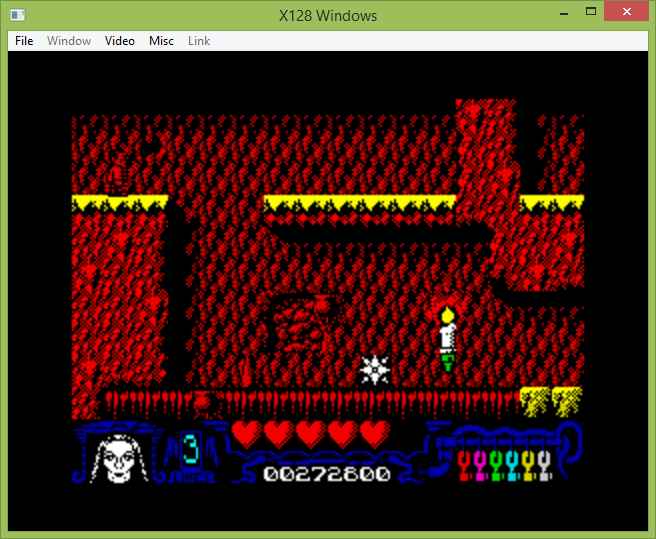
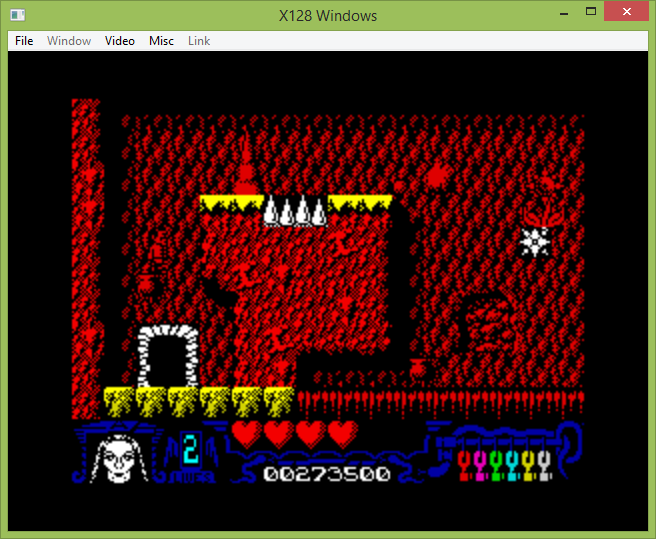
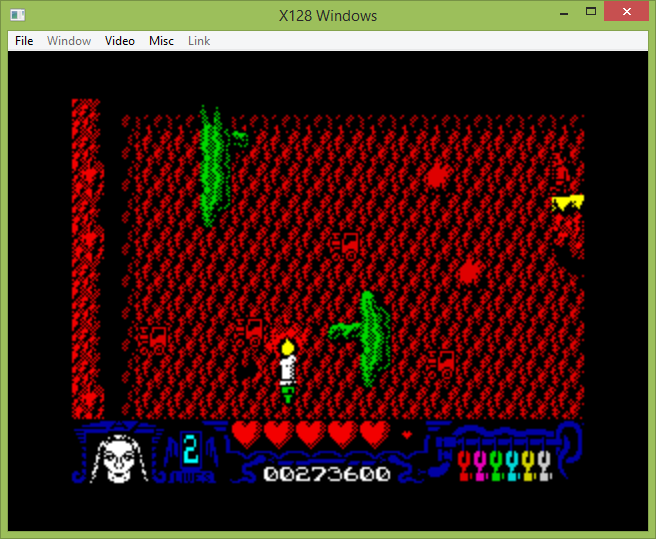
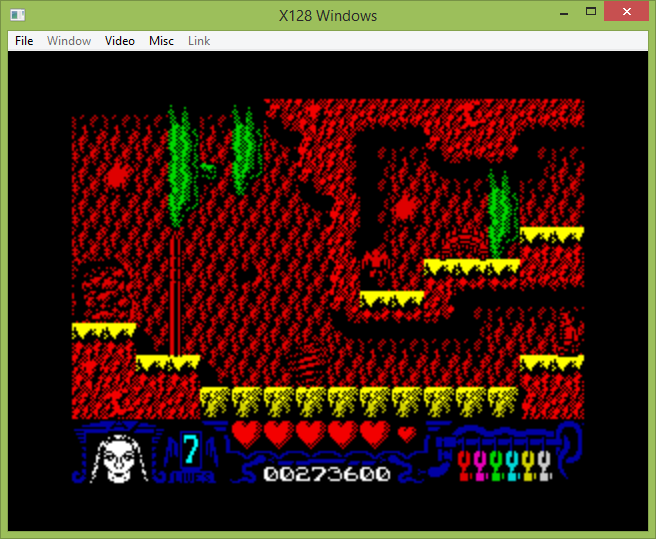
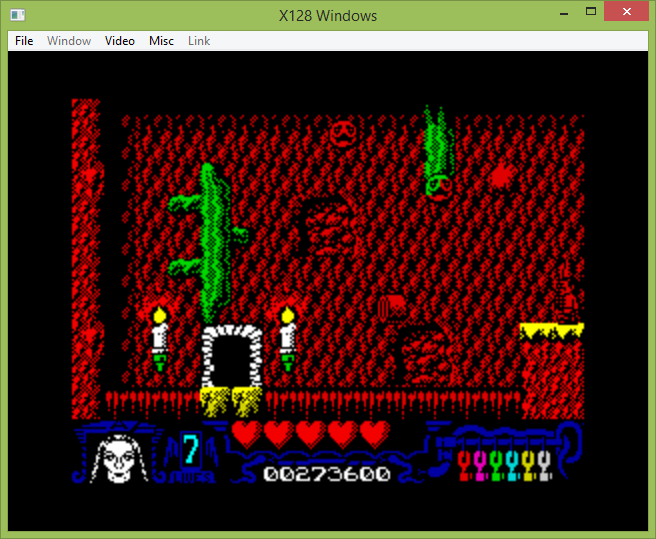
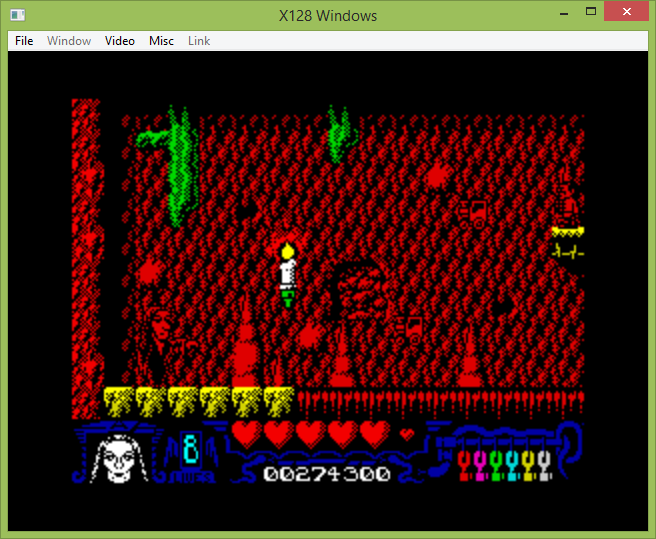
I hope you like red, you'll be seeing a lot of it!
Even getting to the first two checkpoints was difficult. Round and round and round the labyrinthine caves. Who'd have thought that caves were so cavernous?
And then...
Finally! Morticia, my love, I have travelled a great distance, overcome great hardships, and endured many a travail to find you...
I actually had a sharp intake of breath at that moment - it was Morticia! After all this time, over 30 years of owning the game, playing from a snapshot that I'd paused in July 2022... For Ocean's last Spectrum game, they made absolutely sure that you got plenty of play time out of it - decades.
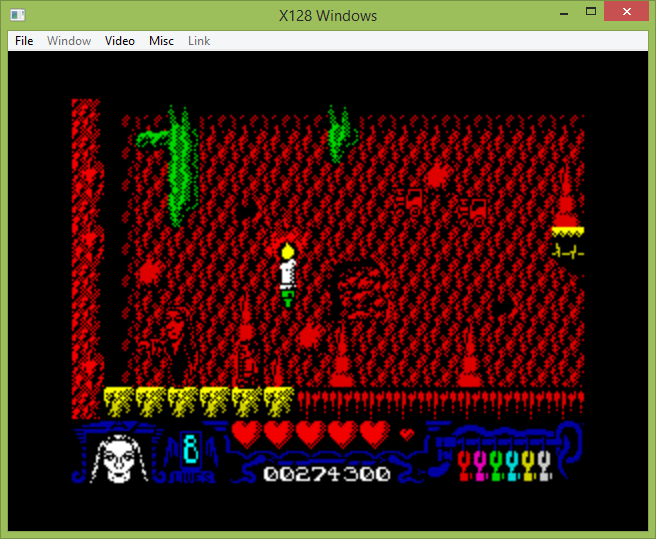
Morticia... why? Why do you turn your back on me...?
But, not so fast, this is the Addams Family and there's one more thing to be done...
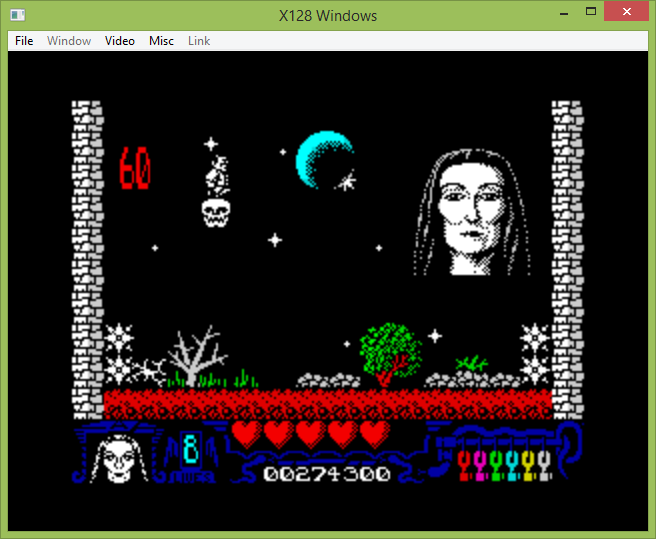
Oh no, you want me to do another one of those deadly trials... In a room where you sink into the ground, so that I have to keep jumping, and the jumps are only half-height over a spark that has very square collision detection (this is much harder than the C64 version)...
But, me being me, as I died over and over again, I kept thinking that the presentation was so much better in this version and that someone should really tell Commodore that 128K is the future.
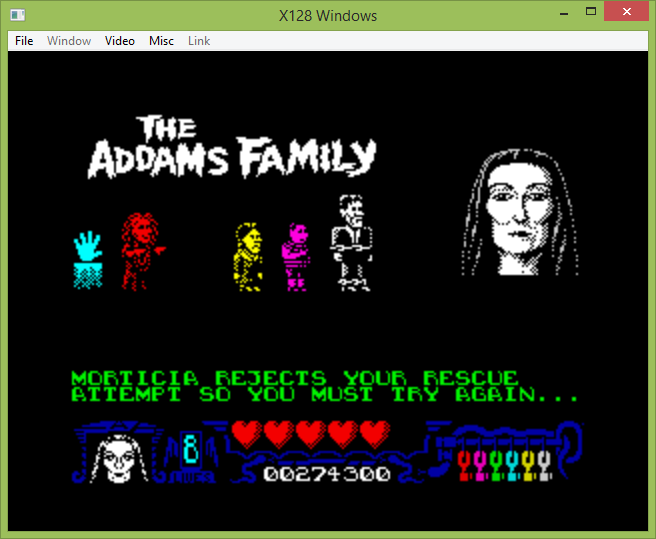
Oh, this family... Love is suffering...
So how did it go?
Just in case you still want to play it yourself, I have hidden the next part behind this link
Spoiler alert: it contains spoilers.
Party like it's 1992...
It's interesting that there was no DOS version of this game. By 1992 most full-price games for the typical 8/16-bit home computers were getting PC ports.
Can anything be done about that? Well, there are plenty of Spectrum emulators that can run on PCs, but what about emulators that can run on the kind of PC you might've had in 1992?
Well, the old Spectrum emulator "Z80" (by Gerton Lunter) could run at full speed on a 25 MHz 386 (and reasonably well on some high-end 286s). It runs on everything down to an 8088 with CGA, EGA, VGA, Hercules, or even Plantronics. Sound can be output through the PC speaker, Adlib, or even the CMS/GameBlaster! Just make sure you have 640K RAM installed and as much conventional memory free as you can manage. The Addams Family (being a 128K game) will run better if you have some EMS memory too.
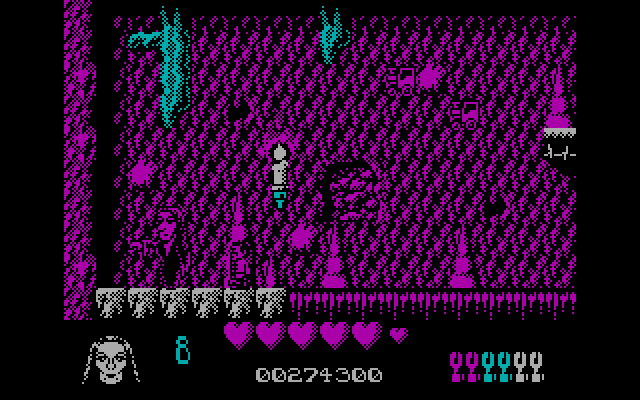
I hope you like magenta, you'll be seeing a lot of it!
Another option, Warajevo, ran on similar systems and could even make stand-alone executable files of snapshots. (It couldn't handle self-modifying code, though, and I haven't tested it in this case - all my old hard drives are in poor condition). Of course, there were a multitude of options that could be tried on PCs (or similar machines) of that era, each with their own pluses and minuses.
12/01/2026
A little Addams Family update. I had a look at the C64 version to see exactly how it handled movement.
Let's get moving...
First of all, let's have far too big a listing showing the code where the controls are checked. Just like the Spectrum and CPC versions, it has a separate check for left and right. Unlike the aforementioned computers, this routine is called 50 times per second:
.C:3544  A5 F2       LDA $F2		; Control byte
.C:3546  29 08       AND #$08		; Check right
.C:3548  D0 63       BNE $35AD

; Pushing right
.C:354a  AD AF 33    LDA $33AF		; $01 = on ice, $00 = not on ice
.C:354d  F0 1B       BEQ $356A
.C:354f  AD 83 33    LDA $3383		; $00 = Facing right, $01 = Facing left
.C:3552  F0 16       BEQ $356A
.C:3554  AE 84 33    LDX $3384		; Check if Speed is zero
.C:3557  F0 11       BEQ $356A
.C:3559  CA          DEX
.C:355a  8E 84 33    STX $3384		; Decrement Speed
.C:355d  F0 03       BEQ $3562
.C:355f  CE 84 33    DEC $3384		; Decrement Speed
.C:3562  A9 01       LDA #$01		; $01 = Not Accelerating
.C:3564  8D CE 33    STA $33CE
.C:3567  4C D3 35    JMP $35D3		; Left movement (ice)

; Move right
.C:356a  18          CLC
.C:356b  AD 62 52    LDA $5262		; Low byte of X position
.C:356e  6D 82 33    ADC $3382		; Add X pixel movement
.C:3571  8D 62 52    STA $5262
.C:3574  AD 63 52    LDA $5263		; High byte of X position
.C:3577  69 00       ADC #$00
.C:3579  8D 63 52    STA $5263
.C:357c  A9 00       LDA #$00
.C:357e  8D 0D 38    STA $380D
.C:3581  20 0E 38    JSR $380E
.C:3584  F0 03       BEQ $3589
.C:3586  4C 13 36    JMP $3613

.C:3589  AD 83 33    LDA $3383		; $00 = Facing right, $01 = Facing left
.C:358c  F0 0A       BEQ $3598
.C:358e  A9 00       LDA #$00		; Zero Speed
.C:3590  8D 84 33    STA $3384
.C:3593  A9 00       LDA #$00		; $00 = Facing right
.C:3595  8D 83 33    STA $3383
.C:3598  AD CE 33    LDA $33CE		; $00 = Accelerating, $01 = Not Accelerating
.C:359b  D0 0A       BNE $35A7
.C:359d  AE 84 33    LDX $3384		; Speed (0-41)
.C:35a0  E0 29       CPX #$29		; Check for maximum
.C:35a2  B0 03       BCS $35A7
.C:35a4  EE 84 33    INC $3384		; Increase Speed (0-41)
.C:35a7  20 51 36    JSR $3651
.C:35aa  4C 10 36    JMP $3610

.C:35ad  A5 F2       LDA $F2		; Control byte
.C:35af  29 04       AND #$04		; Check left
.C:35b1  D0 61       BNE $3614

; Pushing left
.C:35b3  AD AF 33    LDA $33AF		; $01 = on ice, $00 = not on ice
.C:35b6  F0 1B       BEQ $35D3
.C:35b8  AD 83 33    LDA $3383		; $00 = Facing right, $01 = Facing left
.C:35bb  D0 16       BNE $35D3
.C:35bd  AE 84 33    LDX $3384		; Check if Speed is zero
.C:35c0  F0 11       BEQ $35D3
.C:35c2  CA          DEX
.C:35c3  8E 84 33    STX $3384		; Decrement Speed
.C:35c6  F0 03       BEQ $35CB
.C:35c8  CE 84 33    DEC $3384		; Decrement Speed
.C:35cb  A9 01       LDA #$01		; $01 = Not Accelerating
.C:35cd  8D CE 33    STA $33CE
.C:35d0  4C 6A 35    JMP $356A		; Right movement (ice)

; Move left
.C:35d3  38          SEC
.C:35d4  AD 62 52    LDA $5262		; Low byte of X position
.C:35d7  ED 82 33    SBC $3382		; Subtract X pixel movement
.C:35da  8D 62 52    STA $5262
.C:35dd  AD 63 52    LDA $5263		; High byte of X position
.C:35e0  E9 00       SBC #$00
.C:35e2  8D 63 52    STA $5263
.C:35e5  A9 01       LDA #$01
.C:35e7  8D 0D 38    STA $380D
.C:35ea  20 0E 38    JSR $380E
.C:35ed  D0 24       BNE $3613
.C:35ef  AD 83 33    LDA $3383		; $00 = Facing right, $01 = Facing left
.C:35f2  D0 0A       BNE $35FE
.C:35f4  A9 00       LDA #$00		; Zero Speed
.C:35f6  8D 84 33    STA $3384
.C:35f9  A9 01       LDA #$01		; $01 = Facing left
.C:35fb  8D 83 33    STA $3383
.C:35fe  AD CE 33    LDA $33CE		; $00 = Accelerating, $01 = Not Accelerating
.C:3601  D0 0A       BNE $360D
.C:3603  AE 84 33    LDX $3384		; Speed (0-41)
.C:3606  E0 29       CPX #$29		; Check for maximum
.C:3608  B0 03       BCS $360D
.C:360a  EE 84 33    INC $3384		; Increase Speed (0-41)
.C:360d  20 5B 36    JSR $365B
.C:3610  20 74 36    JSR $3674
.C:3613  60          RTS

; Not pushing left or right
.C:3614  AD AF 33    LDA $33AF		; $01 = on ice, $00 = not on ice
.C:3617  F0 16       BEQ $362F
.C:3619  AE 84 33    LDX $3384		; Check if Speed is zero
.C:361c  F0 11       BEQ $362F
.C:361e  CA          DEX
.C:361f  8E 84 33    STX $3384		; Decrement Speed
.C:3622  F0 0B       BEQ $362F
.C:3624  CE 84 33    DEC $3384		; Decrement Speed
.C:3627  AD 83 33    LDA $3383		; $00 = Facing right, $01 = Facing left
.C:362a  D0 A7       BNE $35D3		; Slow down left (ice)
.C:362c  4C 6A 35    JMP $356A		; Slow down right (ice)

.C:362f  A9 00       LDA #$00		; Zero Speed
.C:3631  8D 84 33    STA $3384
.C:3634  4C 10 36    JMP $3610
OK, so where does the X pixel movement value ($3382) come from?
; Calculate X pixel movement
.C:2ece  AE 84 33    LDX $3384		; Speed (0-41) ($00-$29)
.C:2ed1  BD 85 33    LDA $3385,X	; Speed Table
.C:2ed4  8D 82 33    STA $3382		; X pixel movement

; Speed Table
>C:3385  01 01 01 01  01 01 01 01	; $00
>C:338d  01 01 01 01  01 01 01 01	; $08
>C:3395  01 02 01 01  01 02 01 01	; $10
>C:339d  01 02 01 02  01 02 01 02	; $18
>C:33a5  01 02 02 02  01 02 02 02	; $20
>C:33ad  01 02				; $28
That's just a list of numbers!
Hmm, how can we interpret this speed table?
For the first 17 frames ($00-$10), Gomez will move at 1 pixel per frame.
For the next 8 frames ($11-$18), he'll move at ((1 * 3) + (2 * 1)) / 4 = 5/4 , which means an average of 1.25 pixels per frame.
For the next 8 frames ($19-$20), he'll move at ((1 * 2) + (2 * 2)) / 4 = 6/4 , which means an average of 1.5 pixels per frame.
For the next 8 frames ($21-$28), he'll move at ((1 * 1) + (2 * 3)) / 4 = 7/4 , which means an average of 1.75 pixels per frame.
Finally, the speed will stick on the last value in the table ($29), so Gomez will move at 2 pixels per frame.
41/50 = ~0.82 seconds to reach top speed. That's about 2/3rds the time of the (unpatched) Spectrum and CPC versions. Perhaps their routines should have been called 50 times per second?
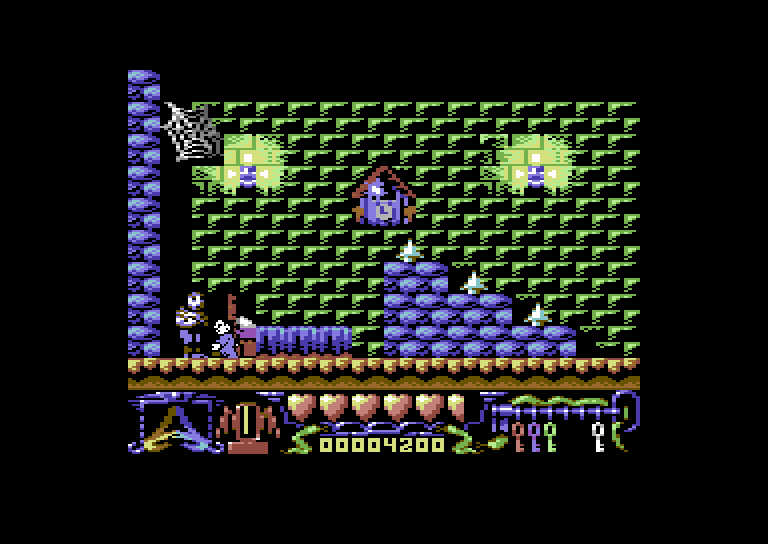
With this incredible acceleration, I can reach Pugsley in no time
What are the implications of this?
With that in mind, perhaps this would be a better patch for the Spectrum and CPC versions?
31907 / 31965 LD A,(40591)
31910 / 31968 ADD A,002		; 198, 002
31912 / 31970 JR Z,31918/31976	; 040, 004
31914 / 31972 NOP		; 000
31915 / 31973 LD (40591),A
Making the bytes to modify:
31910 198, 002, 040, 004, 000
31968 198, 002, 040, 004, 000

(or, in hex):
7CA6 C6, 02, 28, 04, 00
7CE0 C6, 02, 28, 04, 00
This increases Gomez's speed to the maximum in 16 frames (@25 hz), which is 32/50 frames (@50hz), meaning ~0.64 seconds. (And, remember, Amstrad CPC owners - the same fix can be applied at 04133 and 04171 (hex $1011 and $104B) and it works there too!)
This is closer to the speed of the C64's acceleration.
Now I'm a little torn... the old patch is good, it's faster (and it's very playable) but this one is, perhaps, closer to what was originally intended.
I feel the need, the need for speed...
Can the C64 speed table be edited? Oh, yes. You can go pretty quickly. Setting the highest X pixel movement to 3 will make the game feel quite different and make long jumps rather easy. Any faster and it becomes quite difficult to control. Ideal for "hard mode" hacks or speedruns.
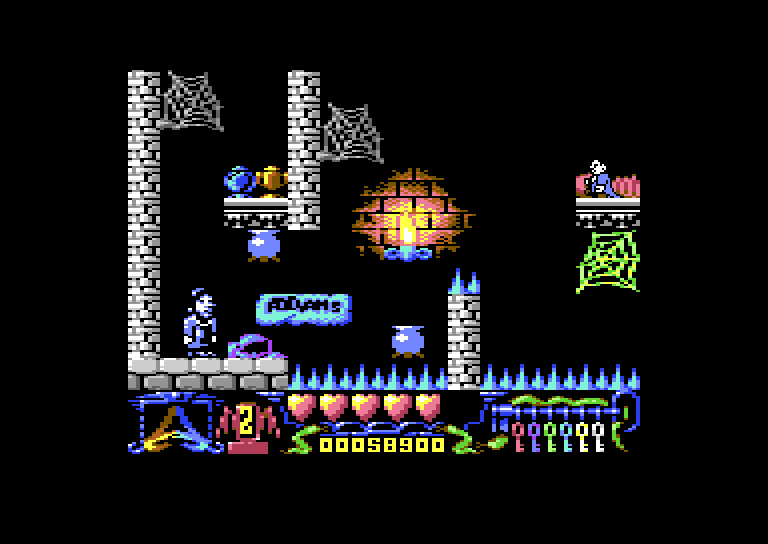
Ah, there you are Wednesday, you look... a little exhausted... I like what you've done with the place, though. Green cobweb - very stylish.
And what do you think about the C64 version, as a game?
It's not too bad. The acceleration speed is a little slow for my liking, but it does create a few interesting scenarios where you have to take a proper run-up to achieve certain jumps, sometimes starting from the previous screen. On the plus side, it doesn't have the speed bug.
It does feel a little spartan for a C64 game, not having any in-game music at all. The cassette version lacks a loading screen and loading music - a good loader usually being one of Ocean's presentational touches.
It's a multiload, with a split map where you have to collect certain things before you can proceed to the next level (unlike the other versions where the house is one, big, traversable map) and it seems to have more pointless dead ends than the other two versions. It's a shame that the C64 did not move to 128K as standard (the likes of Ocean and US Gold had started to make their big titles 128K-only for the Spectrum and Amstrad CPC by the end of their commercial run), or perhaps it would've had more polish as a cartridge game.
Levels 2 and 3 have some jumps that make you think you should be able to jump them, but sometimes it's just a dead-end that you're supposed to get past by another route. I'll have to ask John Astin about it.
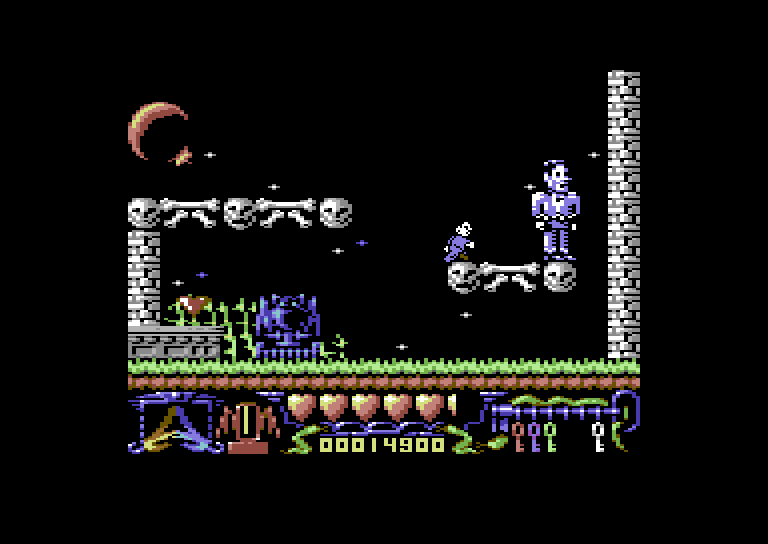
This Gomez does not look like John Astin!
(In fact, no need to ask him. The split map makes it easier and I've managed to finish the game already. That probably means I've managed to miss Morticia in some earlier part of the game in the Spectrum version...)
30/12/2025
"The Addams Family was the beginning and the end."
That's a very big statement. What does it even mean? Explain yourself!
OK, I promise I will. But, what if I said: "The Munsters was the beginning and the end"?
Well, that's clearly not true. Go back to your previous statement, but you'd better justify it!
It was very nice having a well-supported computer. Certainly, a lot better supported than my previous purchase (the Tandy Color Computer) which was bought right at the end-of-the-line.
I remember looking at the first magazine I bought (Your Sinclair, Issue 9, September 1986, with Miami Vice on the cover - very 80s!) and seeing that it had games - a lot of games. Not only that, but I could actually buy the same games that were in the arcade. I was amazed. I had three games for the Tandy, zero new magazines, and the rest of my use of it was learning programming and type-ins from the magazines I did have (on those occasions when I could get use of the television!)
Six years later...
The Addams Family was the last big Hollywood licence (and the last game), released in April 1992 for the ZX Spectrum by Ocean, which was basically the largest games company in the UK home computer market, at that time.
The SNES was also released in the UK in April 1992. The price of console games had always put me off buying them, but this was the first console with such stand-out specifications that I thought I would take a chance on it. (The thing that finally clinched it, though, was the fact that the game controller had multiple buttons. Despite the fact that arcade games had started to have two or more buttons, even before the ZX Spectrum and C64 were released in 1982, most home computers in the West came with joysticks that could only provide a signal for a single fire button. Even though some of the computers could handle more than one button, the computer manufacturers were still happy to bundle cheap single-button joysticks with their computers, and the software developers rarely supported any more than that. So, it was "up to jump" until practically 1993!)
First, you had the pack-in game (Super Mario World), then there were four games available to buy (Super Tennis, F-Zero, Super R-Type, and Super Soccer) and I bought a couple of them. However, Nintendo decided not to release any other games (or allow anyone else to release a game) for quite some time after that. I ended up buying all four games, even though I wasn't that interested in all of them. (Well played, Shigeru, well played...) (Mind you, I even ended up buying an adaptor and imported a couple of games too). I must admit that I was impressed at the quality of game that could fit into a 512K cartridge.
Finally, later in 1992, some more games were released and I decided to buy The Addams Family in November. This felt different from buying Nintendo's games because, for the first time, I had bought a game from the same company that I had bought computer games from before, but at a much higher price and within this "new" model of gaming.
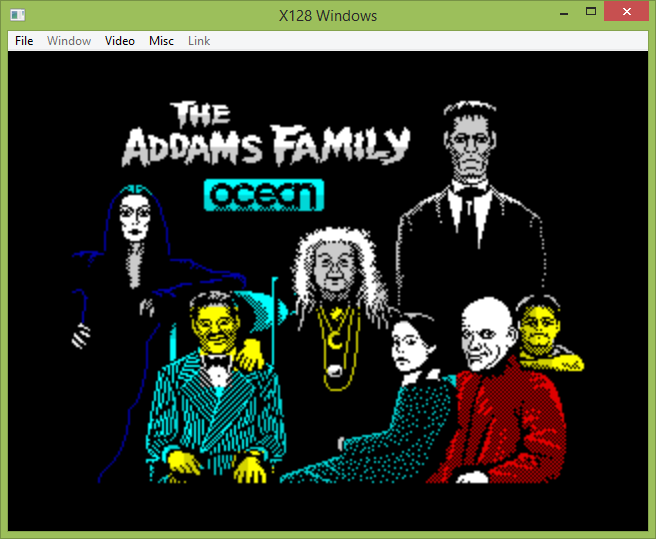
Presented in colour for the first time...
Back six years again...
Previously, (home computer) games had been small, quickly-made consumables. You'd buy them cheaply and buy quite a lot of them. You'd play them for a short time, then move from one experience to the next.
Now the games were larger and more expensive (to buy, develop, and publish). They couldn't be bought on a whim, they were an investment to be carefully considered and researched.
From my perspective, it marks the boundary between that old world of games and the new one.
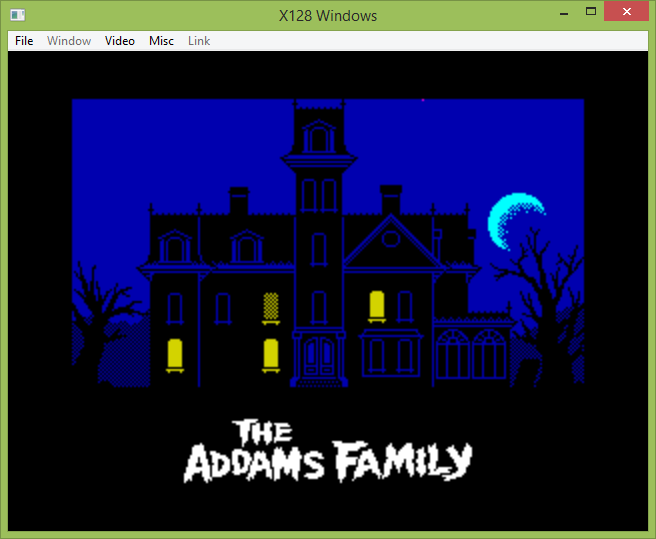
Their house is a museum... so it's probably full of 8-bit computers, like... my house...
A short history of game prices in the UK at that time...
In 1986, the lead formats were still the main 8-bit home computers (ZX Spectrum, C64, and Amstrad CPC) and their games would be bought on cassette by the vast majority of people. The price of a game (by a leading company) was generally £7.95, while a budget game would be £1.99. (C64 and Amstrad CPC full-price games always cost £8.95 for some reason and, naturally, there were some more expensive exceptions). The Atari ST and Amiga did exist, but were still a few years from taking over. They were quite expensive, had limited software support, and the quality of it was variable. At this time, you were often better off buying an 8-bit version of a game.
The 8-bit consoles (Nintendo and Sega) are launched in the UK, but they have a small market share and make little impact at this time. "These console companies with their expensive cartridges... I'm sure they won't last long!"
Price, price, price
For simplicity, I will stick to ZX Spectrum prices and round these up to the nearest pound from now on. So, I will say £8 for full-price, £2 for budget. Cassette prices, naturally. Compilations of the time were excellent value and could get you 4-10 nearly-new games for roughly £10. In those days, you could certainly get by with your pocket money.
Another option was mail order. Sometimes I would buy from Bargain Software. They would sell a brand new £8 RRP game for £6 or a £9 RRP game for £6.50, including p&p. Technically speaking, I was hurting the high street by using mail order companies, but that £2/£2.50 saving made a big difference with pocket money! Additionally, they had older stock being sold off with good discounts, as well as a range of compilations.
If I saved up my money for a month, I could buy four games of varying quality and age (even more if I included a compilation). That was absolute gold at the time.
I still remember reading the review of Rolling Thunder and thinking that it looked good. So I looked at the Bargain Software page, saw "Thunder Rolls In" for £6.50 and thought "that must be it" (it was fairly common for adverts to have misprints in them). I got my postal orders, sent off the order, and then waited for what felt like a very long time to a child.
(Through the magic of the internet (archive), I can find out that it was Your Sinclair, Issue 27, March 1988, with the review on page 18 (with some nice hand-drawn artwork as part of the review, which really helped make the game look interesting), and with Bargain Software on page 5. In terms of misprints, we also have "Army Houses" and "Dan Dare Meets The Mexicom").
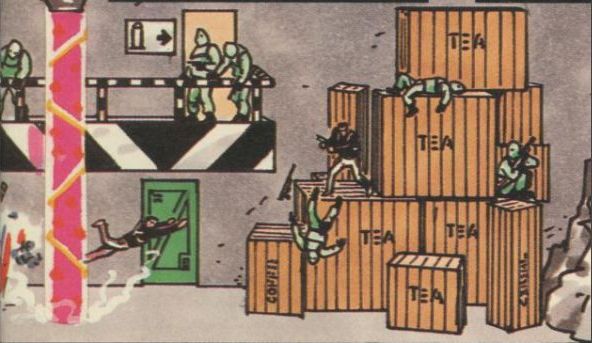
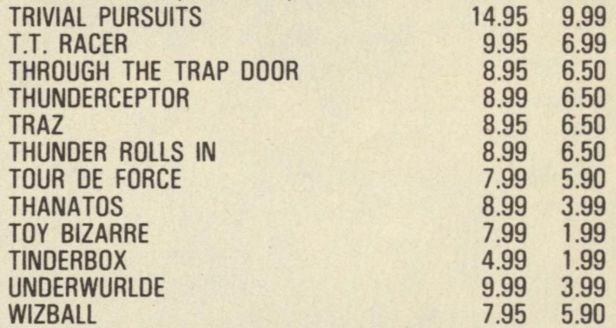
Look at the lovely review artwork (and those lovely discounts) in 1988...
Another source of games was the Home Computer Club. A mail-order subscription service, where they sent you a little catalogue every month and you had to buy at least one item from it. If you didn't respond in time, they sent you their top title of the month and you had to pay for it afterwards. Everything they had was a little old and I suspect that part of their remit was to help sell off unsold stock.
Their stock was discounted from the RRP. Some items were very slightly discounted, while older titles had a much better discount. I found it was a good way of picking up C64 disks, which were usually more difficult to find on the high street. I got quite a few titles, mostly by Ocean/Imagine.
This was the start of the period when arcade conversions and movie licences were really gaining ground over original titles, which would increase development costs and (ultimately) the retail price.
It is the 90s and it is time for more expensive games...
When the Atari ST and Amiga became the lead formats in the late 80s/early 90s, with full-price games at £20-£25 and budget games at £8-£10. This meant that the price of gaming effectively doubled. This brought... how can I put it... pressures and temptations. Piracy grew greatly.
By this point, games with licences are the big sellers. (And, yes, The Munsters got a game released in 1989). Compilations still exist, but you generally don't get the incredible quantity of games that you used to.
Software for 8-bit computers is still available, but is starting to decline in both quality and quantity and it's starting to feel like you're missing out. Full-price titles are £10 and budget games are £3.
The 8-bit consoles are finally starting to gain some traction, with a reasonable market share, but the price of their games (£25-£30) is helping the home computers to maintain their dominance.
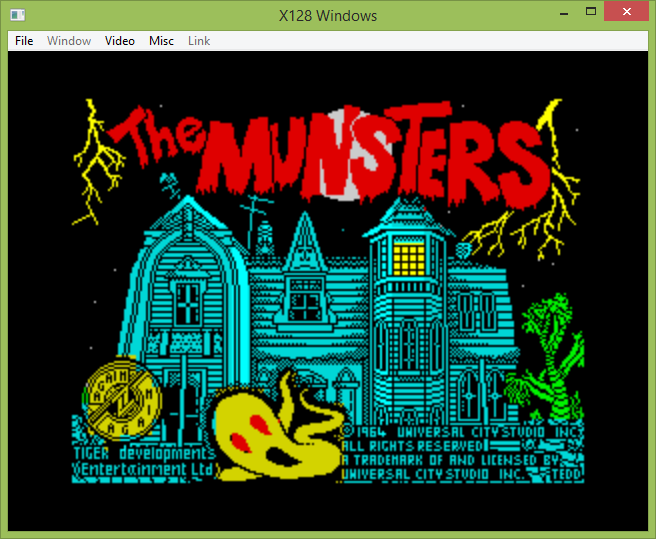
Herman, Lily, Grandpa, Marilyn, Eddie, and Spot did not bring the 8-bit home computer game era to an end...
It's all about the (tilemap) layers this season...
When the 16-bit consoles arrived, the price of gaming effectively doubled again, but it wasn't until around 1992 that the average person would start to consider them.
Pickings were now getting rather slim for the 8-bit home computers. Full-price releases are rare, and cost £12. Budget games are now £4 and were almost all that was left to buy. A lot of them even had (usually older, cheaper) licences to persuade retailers and distributors to stock them and people to buy them.
It was still viable to game on an ST or Amiga, but really not for much longer. With Atari and Commodore failing to sufficiently improve their hardware capabilities on one hand, the increasing quality of PCs, consoles and console games (and their large advertising budgets) on the other hand, and with growing piracy on your mysterious, inexplicable, third hand, the ST and Amiga were being squeezed out of existence.
(Atari and Commodore had, basically, stopped investing in their 8-bit systems, thinking that there was not much future in them. But then something interesting happened... Instead of RAM prices continuing to decrease, they actually went up. This favoured consoles, which had small amounts of RAM, and PCs which were already much more expensive, so the RAM was a smaller fraction of its build cost and it had a guaranteed market for serious applications, so cost was less of an issue. The result was that Atari and Commodore were squeezed in the middle. The other impact of increased RAM prices was that it made 8-bit systems viable for longer. Belatedly, they started prototyping upgrades to their 8-bit systems, but they were so late that they didn't make it to market).
For part of the early 90s, the 8-bit consoles became a kind-of budget option for those who could afford cartridges, with Sega Master System games being more affordable than NES ones. They've finally made it, but they won't be around for too much longer.
(At this point, the PC is still very, very expensive for the UK market, but the price is falling and it's beginning to gain some traction).
Please come to a conclusion...
Within this short period, we go from £8 in 1986 to £40 in 1992 (and that £40 did not last long before it became £45). A fivefold increase (over a period of seven years) in the price of a lead format game. By "lead format" I mean games designed for the leading systems, made by the leading software houses of the time (excluding some of the really rare and expensive options). The lead systems had that balance of technical capability and commercial viability, and the software companies put more of their efforts into these machines. The games were suited to the hardware (rather than designed for a completely different architecture and shoehorned onto another system) and that (usually) resulted in better games.
If we compare the same standard of mainstream product in 1986 with its equivalent in 1992, then (at least in the UK) it moved from 8-bit home computers, to 16-bit home computers, then to consoles and PC. So, in order to have the same experience, you had to move onto those systems.
Additionally, the option of budget games and compilations pretty much disappeared with the consoles. The pastime had suddenly become a rather expensive one. I'm pretty sure your parents' incomes did not increase fivefold over that period, and neither did your pocket money.
If older members of your family weren't interested in games, then you wouldn't be seeing very many of them. They were (yet another) expense that your parents didn't understand. For the rest of the 90s, you were left with the choice of console or PC (with neither being a cheap option), or handheld games (the nearest you had to a budget option from the mid-90s onwards) that were still twice the price of the 8-bit home computer games that had disappeared.
Many families could not afford this rapid rise and I must admit that I "fell off the wagon" in the early 90s, as the price of gaming began to massively exceed a teenager's budget.
The money you have at that age largely depends on your parents, which largely depends on who their parents were, which part of the world you were born in, whether there was a war there long ago, and so on. The kind of things that should not matter in the present day.
A few years later, I was a little older, I finally had a little bit of money, and I was able to start buying legitimately again. It's a shame that it could not have been that way the whole time.
There was the supply, the demand, the employment, the entertainment value, and the general benefit that came from it. Yet, no-one could come up with a system where everyone got what they needed. Although, that is touching upon a far greater and more difficult problem in the world.
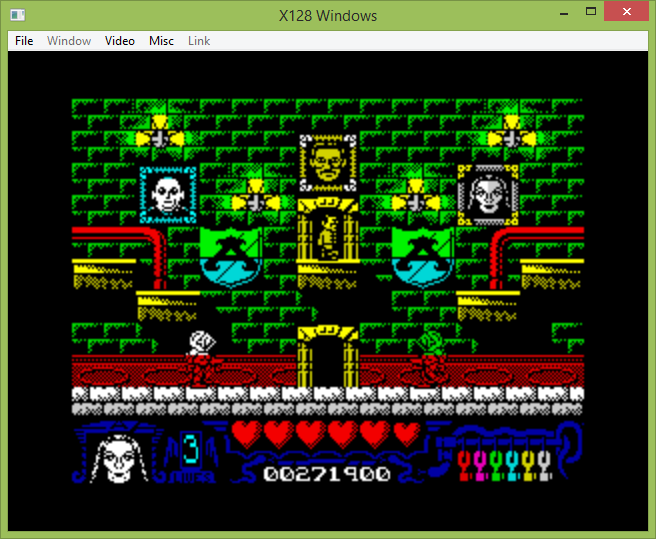
Featuring some portraits as big as a person...
So, come on, back to The Addams Family!
The ZX Spectrum game is a platformer that is a single-load and works on 128K machines only. Unlike the console or 16-bit home computer versions, it's flip-screen instead of scrolling. This allows it to maintain some colour and work within the hardware limits of the Spectrum.
The one major problem is that it was released with a bug. The player character accelerates very, very slowly indeed. It makes the game unplayably difficult (although there is a very impressive longplay online).
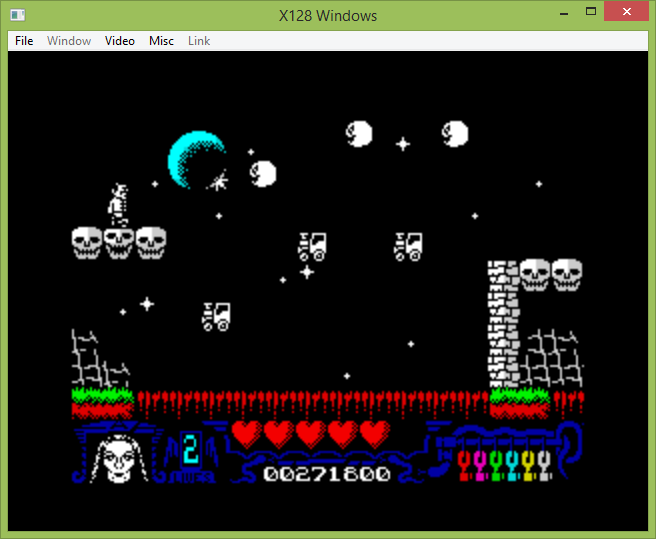
Collapsing platforms, bouncy heads, a lava pit, and the slowest acceleration in the world?
Are you sure it's a bug?
I call it a bug because the same issue is not present in any other conversion (apart from the Amstrad CPC, which uses the same gameplay code as the Spectrum).
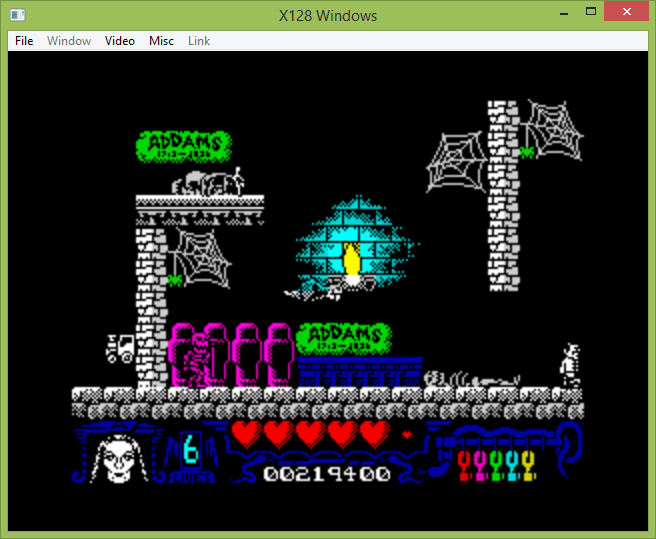
I get the feeling that Wednesday does not want to be found...
Explain your thinking...
Here is the code that controls Gomez's speed:
31907 LD A,(40591)
31910 INC A			; Increase speed (left).
31911 JR NZ,31915
31913 LD A,255			; Cap at 255. (16 = medium, 24 = faster, 32+ = fastest)
31915 LD (40591),A

31965 LD A,(40591)
31968 INC A			; Increase speed (right).
31969 JR NZ,31973
31971 LD A,255			; Cap at 255.
31973 LD (40591),A
It's called 25 times per second when moving left or right and the speed counts up from 0 (not moving) to 255 (maximum). Consequently, it takes ten seconds to reach the maximum. However, it's not using subpixel movement, you just "move a bit faster" when it's above certain values. Gomez's speed reaches its maximum once you've reached 32 (or more), so it takes roughly 1.25 seconds to reach top speed. Most of that time is spent moving at (an average of) one pixel per frame - much slower than the enemies or platforms!
This is significantly slower than all the other versions and it has a really negative impact on the gameplay.
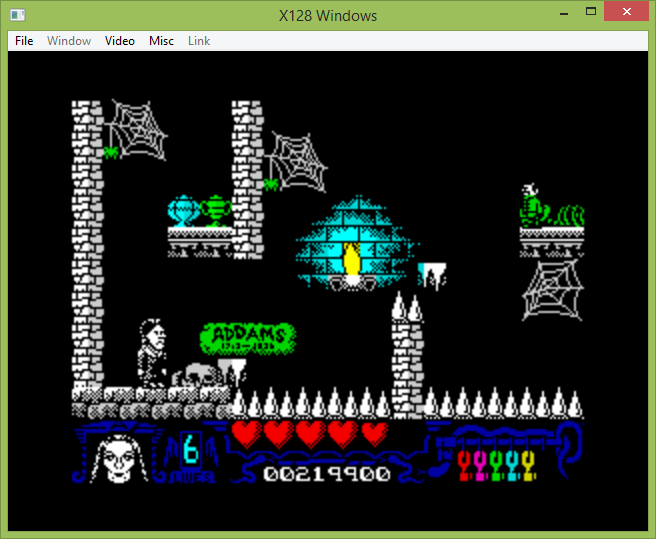
Ah, there you are Wednesday. You don't look very happy to see me and you look a bit older, but then it has been 30 years.
So there's not much point in playing this game then...
While it's a pity that the game was released with the bug, the fact that it was released means that it can be fixed!
Plenty of people have developed their own patches over the years, but here is mine:
31907 / 31965 LD A,(40591)
31910 / 31968 SCF		; 055
31911 / 31969 RLA		; 023
31912 / 31970 NOP		; 000
31913 / 31971 NOP		; 000
31914 / 31972 NOP		; 000
31915 / 31973 LD (40591),A
Making the bytes to modify:
31910 055, 023, 000, 000, 000
31968 055, 023, 000, 000, 000

(or, in hex):
7CA6 37, 17, 00, 00, 00
7CE0 37, 17, 00, 00, 00
This increases Gomez's speed from 0 -> 1 -> 3 -> 7 -> 15 -> 31 -> 63 -> 127 -> 255 in 8 frames (~1/3 of a second), giving you full speed in 6 frames (~1/4 of a second).
This allows you to have a (very short) period of fine movement as well as quick acceleration.
(And a bonus for Amstrad CPC owners - the same fix can be applied at 04133 and 04171 (hex $1011 and $104B) and it works there too!)
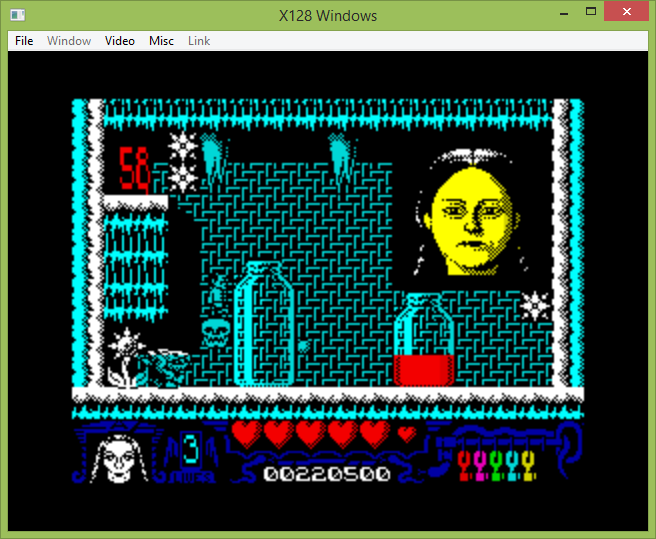
Wednesday wants me to survive 60 seconds in this deadly room with an icy floor... or perhaps she doesn't?
Is that an improvement?
It's not a perfect solution, but it fits into the space available without having to make any more drastic alterations and it makes the game significantly more playable. I haven't finished the game yet, but (looking at my saved games) I have one where I've collected all the keys and only appear to have Morticia left to rescue, so I must be quite close to the end. (I've only been using snapshots so that I can stop playing and come back later, rather than reloading all the time, honest).
Once you get used to the initial difficulty level of the game, it's actually very good. A fitting send-off for the ZX Spectrum by Ocean that moves away from the style of the old Spectrum platformers and goes (partially) to the style of console platformers.
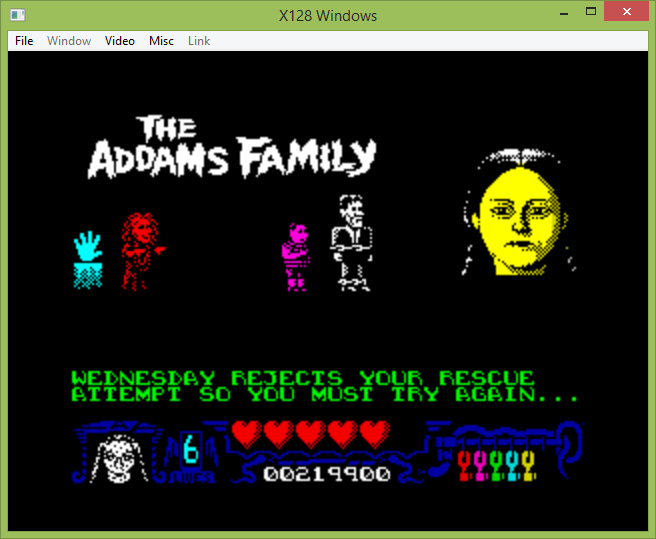
Wednesday does not want to be rescued. Perhaps because it's still only Tuesday?
And the SNES version?
This is also a good game. Ocean had to adapt to the new world and come up with a game that played and felt like a console-style platformer, as well as achieve the level of presentation expected for the new system, and they succeeded at that. I did not regret my purchase and played it to completion.
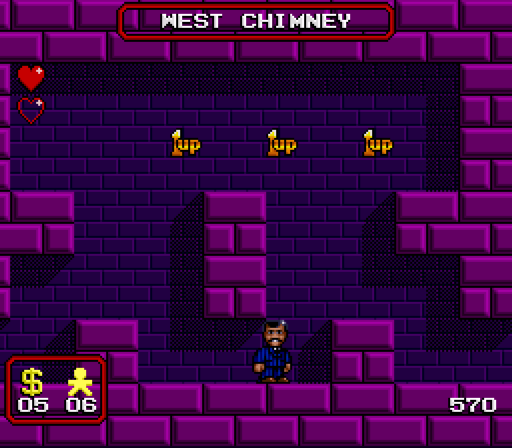
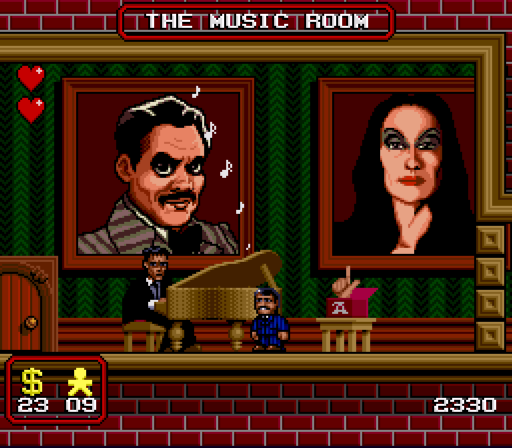
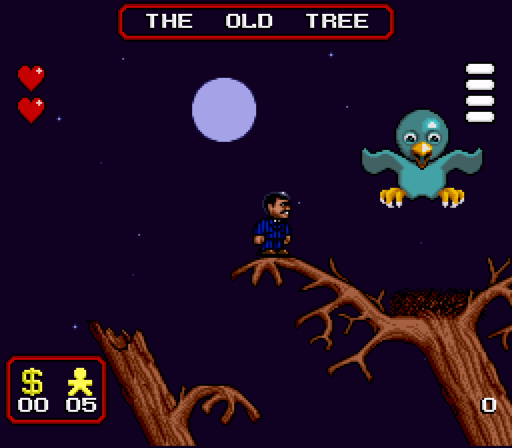
"OK, I admit that the SNES is capable of displaying very large portraits..."
07/12/2025 (with a little update on 11/12/2025)
Software for home computers had the fundamental problem of having to be delivered on all sorts of different media.
In Europe, audio cassettes were the standard for most 8-bit systems, but most had at least one disk format to support as well. 5.25" disks for the C64/C16/VIC-20, Atari 8-bit, and BBC Micro. 3" disks for the Spectrum +3 and Amstrad machines. 3.5" disks for the 16-bit systems and (less common in the UK) MSX.
Then for the ZX Spectrum you also had a million and one different disk interfaces, as well as Microdrives, Wafadrives, Quick Disks, etc. Some computers even had interfaces that could use those little dictation machine cassettes.
Add onto that the fact that you also have to support single-sided and double-sided drives, 40 and 80 track drives, etc.
8" drives were not an option, although you could theoretically attach an 8" drive to most Commodore machines by using an IEEE-488 interface cartridge. Just don't expect to find any software for it.
Finally, as all the old systems died out, the surviving ones received optional 3.5" drives, but with almost no support. High-density disks came later, but only on PCs and some very, very late interfaces for the C64 and ZX Spectrum.
That sounds expensive...
How could a software company afford to support all of those different media formats? The simple answer was: "they didn't". They stuck to the most common ones. Only some very small-scale software producers (that tended to master their software by hand) supported the less-used formats.
So what if there was a system that took away the publishing risk?
East
In Japan, there was the Famicom Disk System. It had a distribution network using a machine that was placed within stores, and (in exchange for money) it could write to Nintendo's custom Quick Disks. The blank disks could be purchased from the same store (mail order was also possible). The system could only be used with Nintendo's console. I think it would've been interesting if it had been released in Europe, as the price of cartridges was far higher than we were used to. The levels of piracy might've been quite impressive though.
West
In Western Europe, there was EDOS, which stood for "Electronic Distribution Of Software". This was a machine that was placed in stores, but was not used by the public. Only a member of staff was allowed to use it and it was (commonly) kept in a back room to keep it as far away from customers as possible. It was capable of writing to audio cassettes, 5.25" disks, 3.5" disks, and 3" disks. Unlike Nintendo's distribution system, it supported a wide range of computers: the ZX Spectrum, C64, Amstrad CPC, MSX, Atari ST, Amiga, and DOS PCs (3.5" DD and 5.25" DD).
Some sort of download system would've been ideal, but the telephone network was not fast enough to download software, so everything had to be stored on CDs. A modem was involved, but only for administrative purposes.
This link explains the details of it better than I can.
The EDOS experience
In Scotland, the most common place to find it was in John Menzies. It was a chain of high street shops, of that time, that sold a bit of everything. It was like a large newsagent that also sold music, videos, computer games, board games, stationery, art supplies, etc. It was practically the same as WH Smith in the rest of the UK, so you'd rarely see a WH Smith in Scotland, and you'd rarely see a John Menzies in England. You would never see them in the same room at the same time.
While it is common to describe the EDOS experience as being "choose from a catalogue", that was not the impression that I had in John Menzies.
I don't recall seeing any advertising of the system at the time, nor of there being any detailed explanation of the system in-store.
In John Menzies, they tended to pre-prepare a number of games. So, my experience of the system was looking at the boxes on the shelves, then taking the ones I wanted to the counter.
Was it possible to ask them to make one that was not on the shelves? Or to place an order with them and come back later to collect it? I have no idea. There were times when I would see a C64 cassette version of a game and think to myself that I would buy it, if it was the disk version (see the update below for an explanation of this).
If it was possible to place an order, then it seems they missed out on possible sales by failing to make that clear.
What did they look like?
Here is my legitimate, shop-purchased, royalties-paid copy of Spy vs Spy: Arctic Antics for the Amstrad CPC.
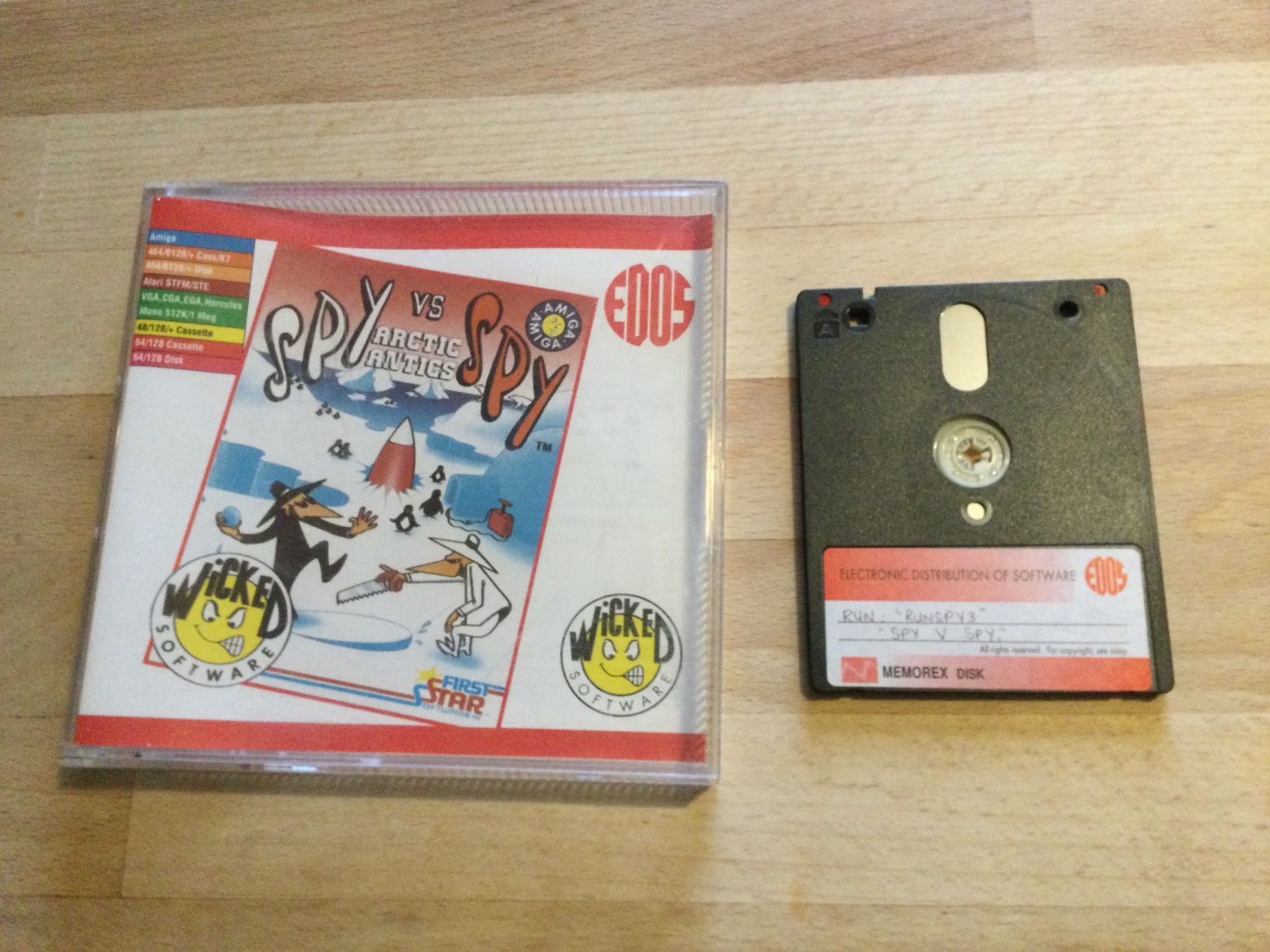
Box, inlay, disk, and early 90s marketing
As you can see, the disk is very plain (side 2 is just black, with no sticker at all) and the packaging is very much "one size fits all", so the box is designed to fit the largest supported medium (5.25" disk). There is no plastic insert, so the cassette or disk flops around inside the oversized case. There's room for two cassettes, four 5.25" disks, four 3.5" disks (barely), but only room for two 3" disks, due to their thickness.
The combined inlay and instructions consist of a single, folded sheet of glossy paper. Most of the EDOS releases used the same template for the inlay, making things look a little samey.
If you were the sort of person who considered the packaging to be an important part of the whole software experience, then you might find it a little underwhelming.
What size is that disk?
As you can see, 3" disks are very small. Unlike other odd formats, their capacity could be just as much as the rival 5.25" and 3.5" disks (80 track, double-sided 3" drives did exist, although the 8-bit machines tended to use the 40 track, single-sided drives). They were a little late to the party, so were not as commonly used. Amstrad machines were the most notable for using them. But without widespread support, required to bring economies of scale, the cost of the disks remained relatively high compared to the more common formats.
But how can I convey their size? What would be the correct visual comparison? Other floppy disks? CDs? Gramophones?
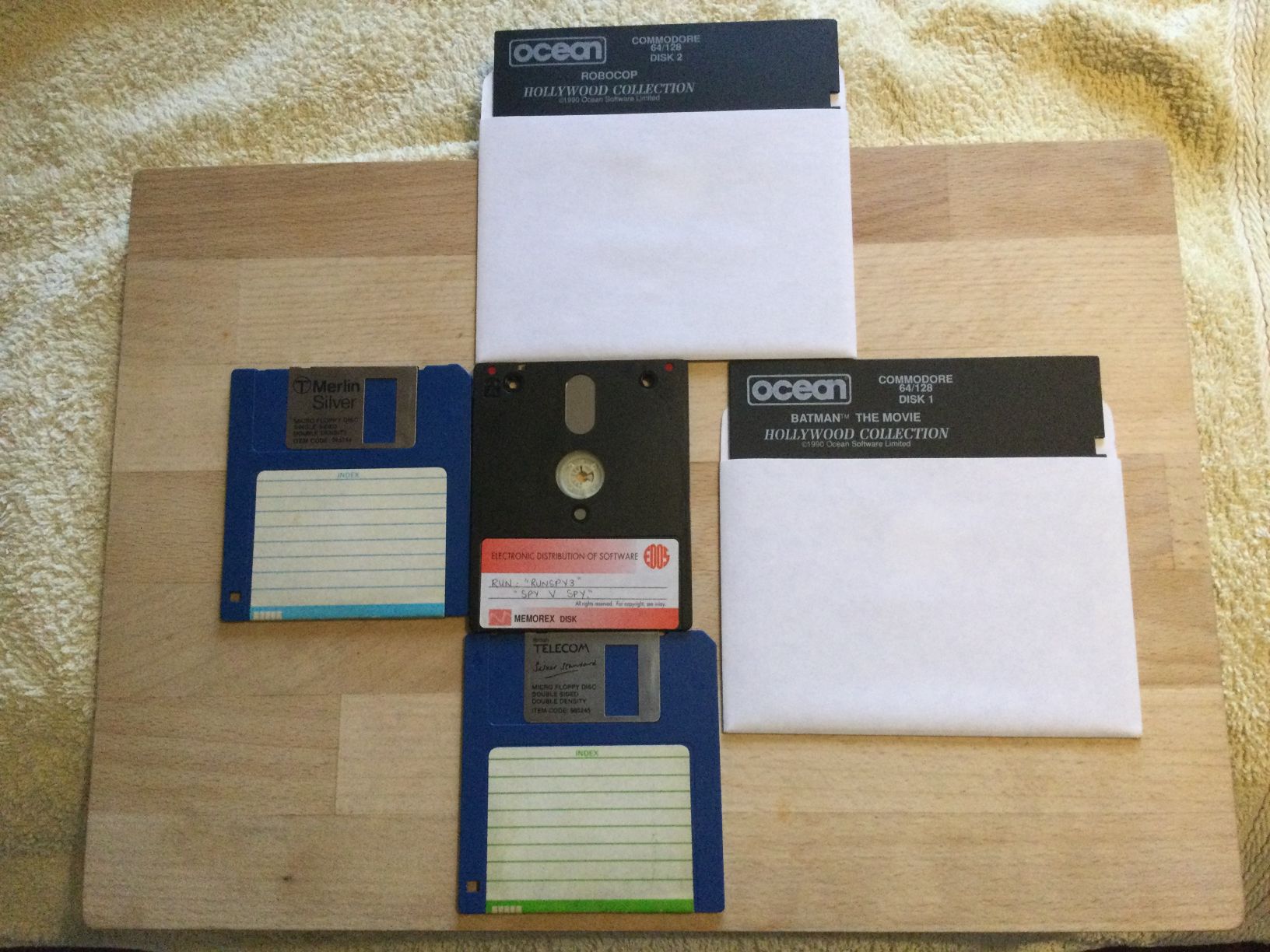
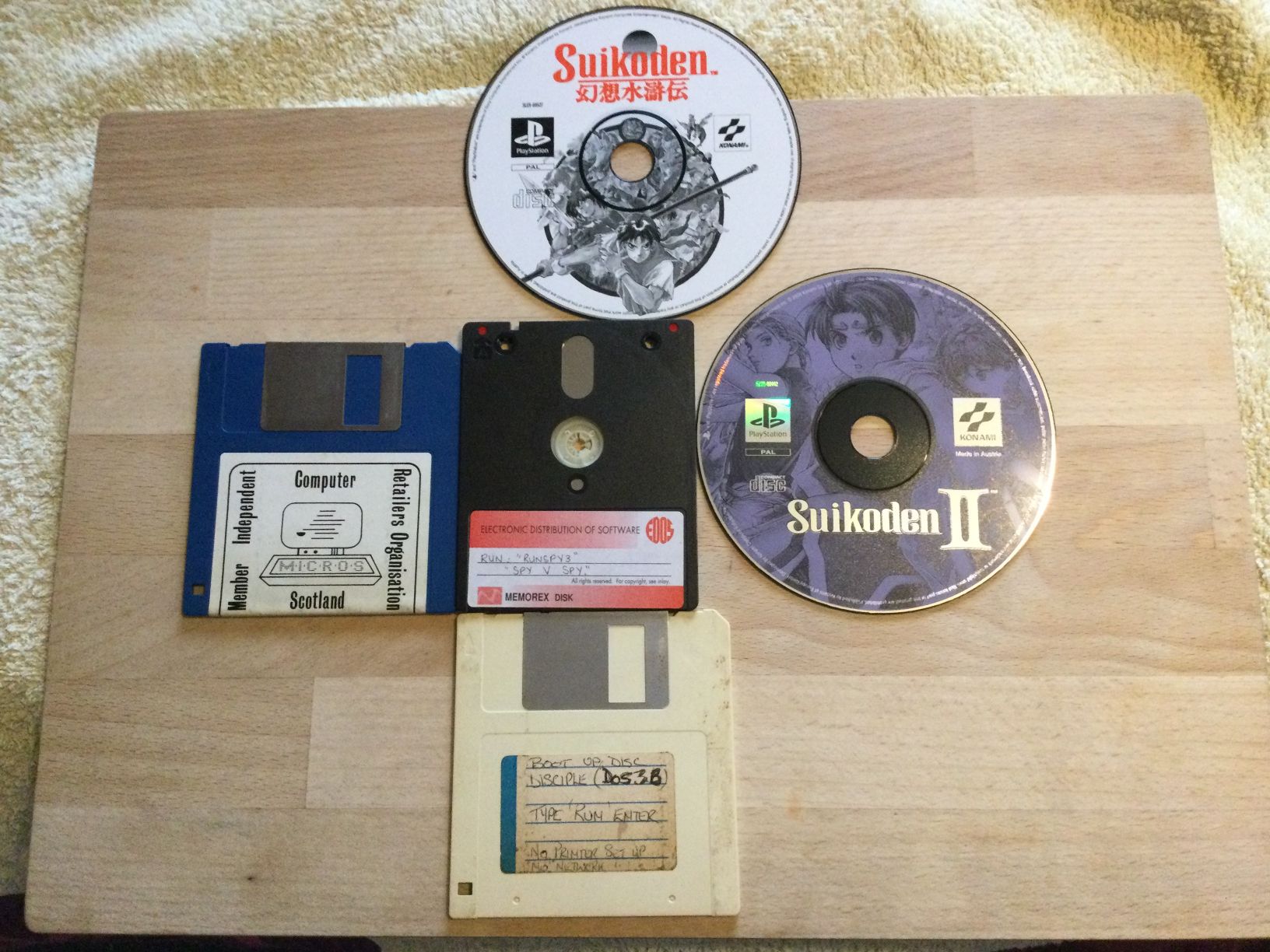
They are this size, exactly. No bigger, no smaller. (Why did I put them on a chopping board, on a towel, on a bed?)
What about this?
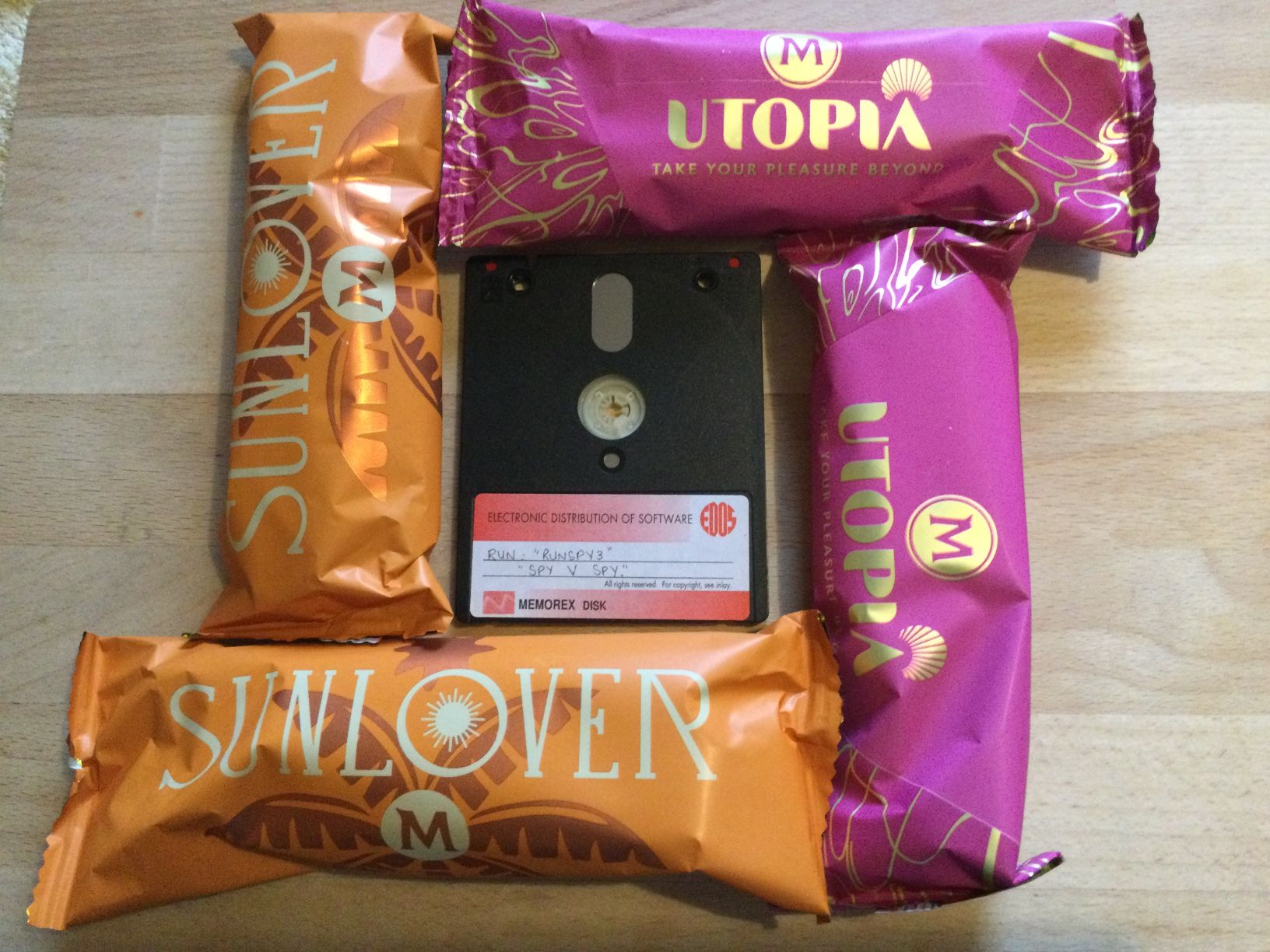
Magnum metrics
Yes, I think I've found the ideal unit of measurement.
Anyway...
But the packaging wouldn't matter, if you could get access to a far wider range of software than you could usually find?
Well... that did not happen, in practice. Most of the larger companies did not support the system, or only put a few of their games on it. You would think that it would have been suitable for making their back catalogues available at little cost. Perhaps there were contractual issues with their arcade or movie-licenced titles to consider.
Also, if a game had multiple versions (for example, a separate 128K version) then you would be stuck with the most-compatible version that worked on that particular machine (48K or 64K). This was not unique to EDOS though, it was a common pitfall when buying a compilation or a budget re-release.
But it would still be ok, if it meant you could get the games cheaper, as the publisher did not have to pay for the media and duplication costs?
Well... that did not happen either. Mostly, the games were the same price.
But, even then, it would still be worth it, if it meant you could get software for your rare/unsupported drive?
Well... no. Only the standard disk drives of each system were supported. The ZX Spectrum, C64, and Amstrad CPC had both cassette and disk support, but Spectrum +3 disk titles seem to be quite rare compared to the others.
But... it allowed the less-popular computer systems to receive software support?
Again, no. It turned up far too late (1991) to support the 8-bits of the early 80s. There were a tiny number of MSX cassette titles, as it was still used in some European countries. There was no support for the Atari 8-bit, C16/+4, VIC-20, BBC Micro/Electron, Dragon/Tandy CoCo, Oric, Enterprise, or any of the other uncommon or discontinued micros that were once so plentiful.
It was a missed opportunity but, ultimately, it was a business. So, while it would've been a useful service to provide, it wasn't economical to do so.
EDOS was a good idea, in principle, but it did not take off. Perhaps the machines should've been placed in public libraries and used as a form of open-ended software lending, for a small fee.
At some point in the early 90s, all of the high street stores in the UK decided that they would stop carrying 8-bit computer software, bringing the "commercial era" to an abrupt end. EDOS could've been used to continue to provide software support, leaving the shelves free for more profitable goods, but that did not happen either. Online sources say EDOS ran until 1994.
Not long after that, the last of the 8-bit magazines disappeared too. At the time, it felt like the shops were doing their very best to give me no reason to set foot inside them, but they were just acting as businesses. Trying to sell goods as quickly and profitably as possible, but also reducing their footfall and the possibility of a casual purchase in the process.
As the high street declined, many of the shops that used to sell games disappeared. John Menzies decided to leave the high street quite early on, and their stores were bought by WH Smith and rebranded. Now, they have changed hands again, and are trading as TG Jones.
In the end, they never stood a chance against the changing ways of shopping. But it did not help when they stopped selling those cheap games that were such a staple of youth.
(In the making of this article, I dropped an old iPad onto my big toe. I am not pleased).
A little update
Just to clarify the statement about John Menzies selling a cassette version when I wanted the disk version, when the boxes were usually multiformat...
Sometimes John Menzies would put an original box on the shelf, but when you bought it they'd give you an EDOS cassette.
I'm not sure why. Perhaps they had a supply of original boxes, or perhaps they had lost the original cassette and realised that they could still sell the box by using EDOS to make a new cassette. (Game boxes were put on the shelf, while the games were kept in a drawer (or a backroom) because people would just steal the cassettes if you put them on the shelf, so they were kept separate).
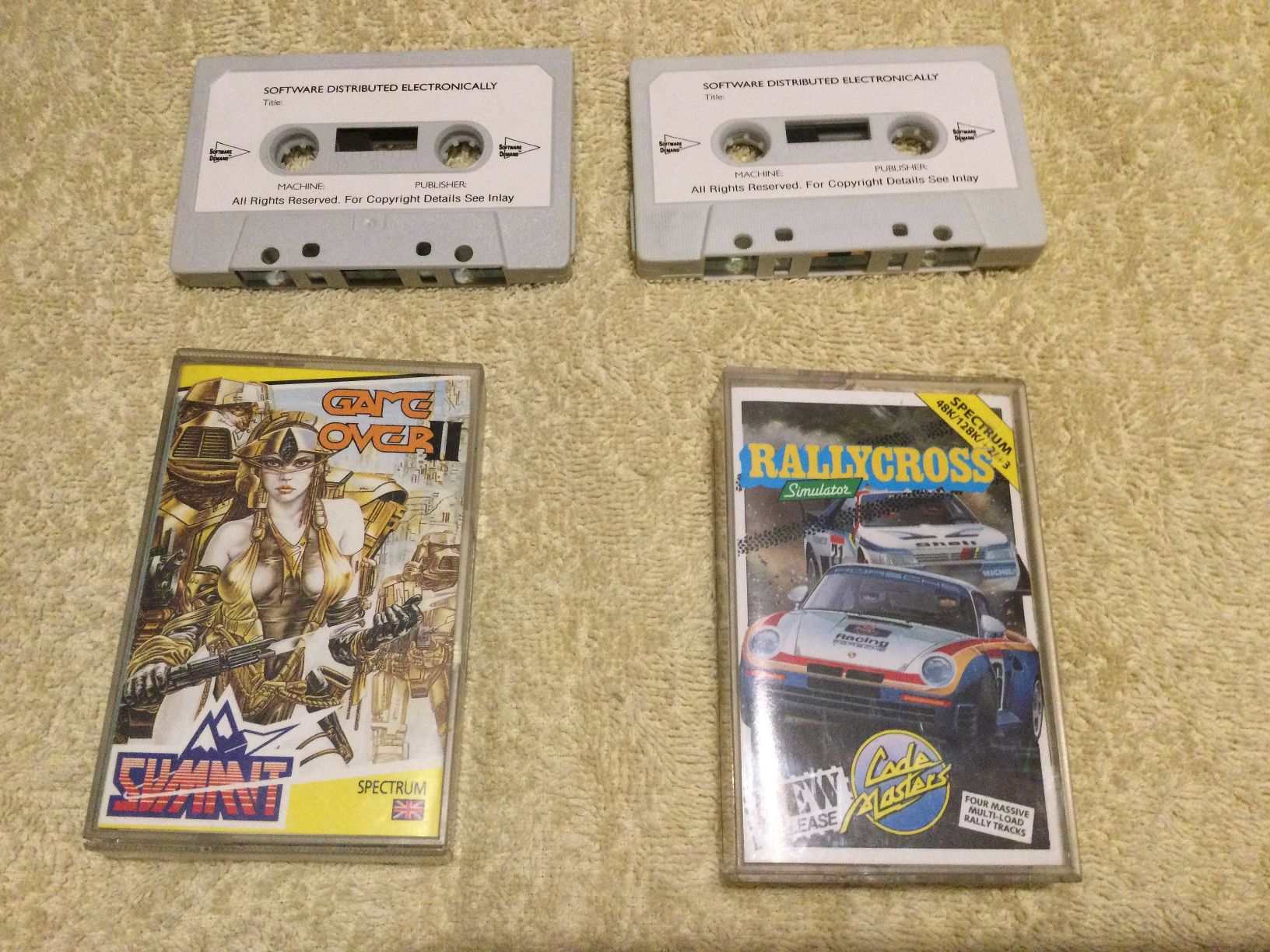
I brought back the towel, but should I have brought back the chopping board? Also, the quilt under the towel was very lumpy today, nothing is aligned at all. You see, that's why I should've used the chopping board... arghh.
(C) Jane McKay, 2026